L’Orfeo
An opera in five acts by Claudio Monteverdi
September 24-27, 2026| Jarvis Opera Hall, DePaul University, Chicago
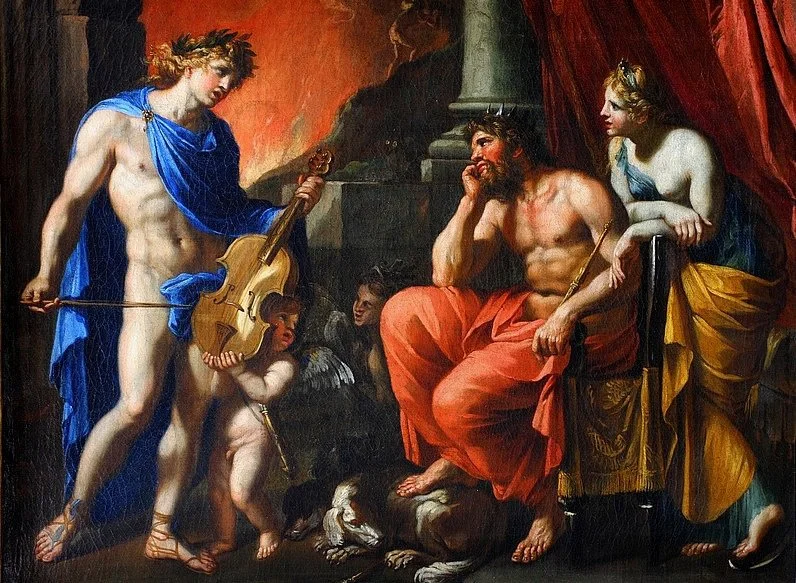
François Perrier (1590–1650), Orpheus before Pluto and Persephone, 1645. Oil on canvas, Musée du Louvre, Paris.
“Haymarket Opera Company remains a national treasure.”
Michael Moore, EarRelevant
“…one of the city’s true musical gems, lately moving from triumph to triumph.”
Tim Sawyier, Chicago Classical Review
“Haymarket Opera Company has established itself well beyond Chicago.”
Kyle MacMillan, Total Baroque Magazine
“A luminous, fully staged production of Monteverdi’s L’Orfeo.”
Wynne Delacoma, Musical America
“A deeply researched, richly detailed design and staging practice.”
Bradford Case, Parterre Box
“The performance was unimpeachable.”
Tim Sawyier, Chicago Classical Review
“As usual with Haymarket productions, the singers made period opera’s highly stylized movement and poses seem entirely natural.”
Wynne Delacoma, Musical America
“Chicago is a premier destination for the authentic realization of Baroque masterpieces.”
Michael Moore, EarRelevant
“Haymarket’s careful historical research revealed anew the creative vigor of genuinely old stage techniques.”
Bradford Case, Parterre Box
“One of the most ambitious projects [L’Orfeo] in its fifteen-year history.”
Kyle MacMillan, Total Baroque Magazine
“L’Orfeo can delight, distress, soothe, and revive.”
Bradford Case, Parterre Box
“Wilder ‘owns’ the role of Orfeo.”
Michael Moore, EarRelevant
“Glorious musicianship and stagecraft.”
Tim Sawyier, Chicago Classical Review
“Wilder’s Orfeo sang his beguiling melodies with an endearing blend of youthful swagger and shrewdly calculated diffidence…He filled the theater with bursts of confident, gleaming sound.”
Wynne Delacoma, Musical America
“Chase Hopkins deserves immense credit for the singers’ acting, which set this production apart.”
Tim Sawyier, Chicago Classical Review
“Their choral singing was exceptional.”
Bradford Case, Parterre Box
“The transition between Acts IV and V was jaw-dropping.”
Tim Sawyier, Chicago Classical Review
“Under Hopkins’s direction, the results seemed as organic as friends gathering for a picnic.”
Wynne Delacoma, Musical America
“The only complaint one can make about Haymarket Opera these days is the difficulty of getting a ticket.”
Tim Sawyier, Chicago Classical Review
Orpheus dares to rescue his beloved Eurydice from the underworld, only to lose her forever with a fateful glance. More than 400 years after its premiere, Haymarket Opera Company and The Newberry Consort join forces to present Monteverdi’s timeless operatic masterpiece, L’Orfeo.
L’Orfeo
Music by Claudio Monteverdi
Libretto by Alessandro Striggio the Younger
Thursday, September 24, at 7pm
Friday, September 25, at 7pm
Saturday, September 26, at 2pm
Sunday, September 27, at 2pm
Presented in a new, fully staged production
Co-produced with The Newberry Consort
Jarvis Opera Hall
Holtschneider Performance Center at DePaul University
800 W. Belden Avenue, Chicago, IL 60614
Performance length: 2.5 hours, including one 20-minute intermission
This performance is sung in the original Italian, with projected English titles.
Post-opera talkback
Following the performance, members of the team will host a talkback with the audience to answer questions and share insights into the music, dramatic choices, and the making of the production.
Opening-night toast
Join Haymarket’s cast, orchestra, and production team immediately following the performance on September 24. All ticket holders are invited! No post-opera talkback will be presented on opening night.
About the production
Haymarket Opera Company and The Newberry Consort join forces to present Claudio Monteverdi’s 1607 operatic masterpiece, L’Orfeo. Following a 2025 presentation of the oldest surviving opera, Jacopo Peri’s Euridice, Chicago's acclaimed historical-performance ensembles return to the myth of Orpheus in a new, fully staged production of Monteverdi’s timeless favola in musica (fable in music) on the same myth. L’Orfeo stands as one of the most enduring masterpieces of the operatic genre. More than four centuries after the opera’s premiere, this co-production will captivate both seasoned opera lovers and first-time audiences, restoring Monteverdi’s revolutionary work to its full splendor for the 21st-century stage.
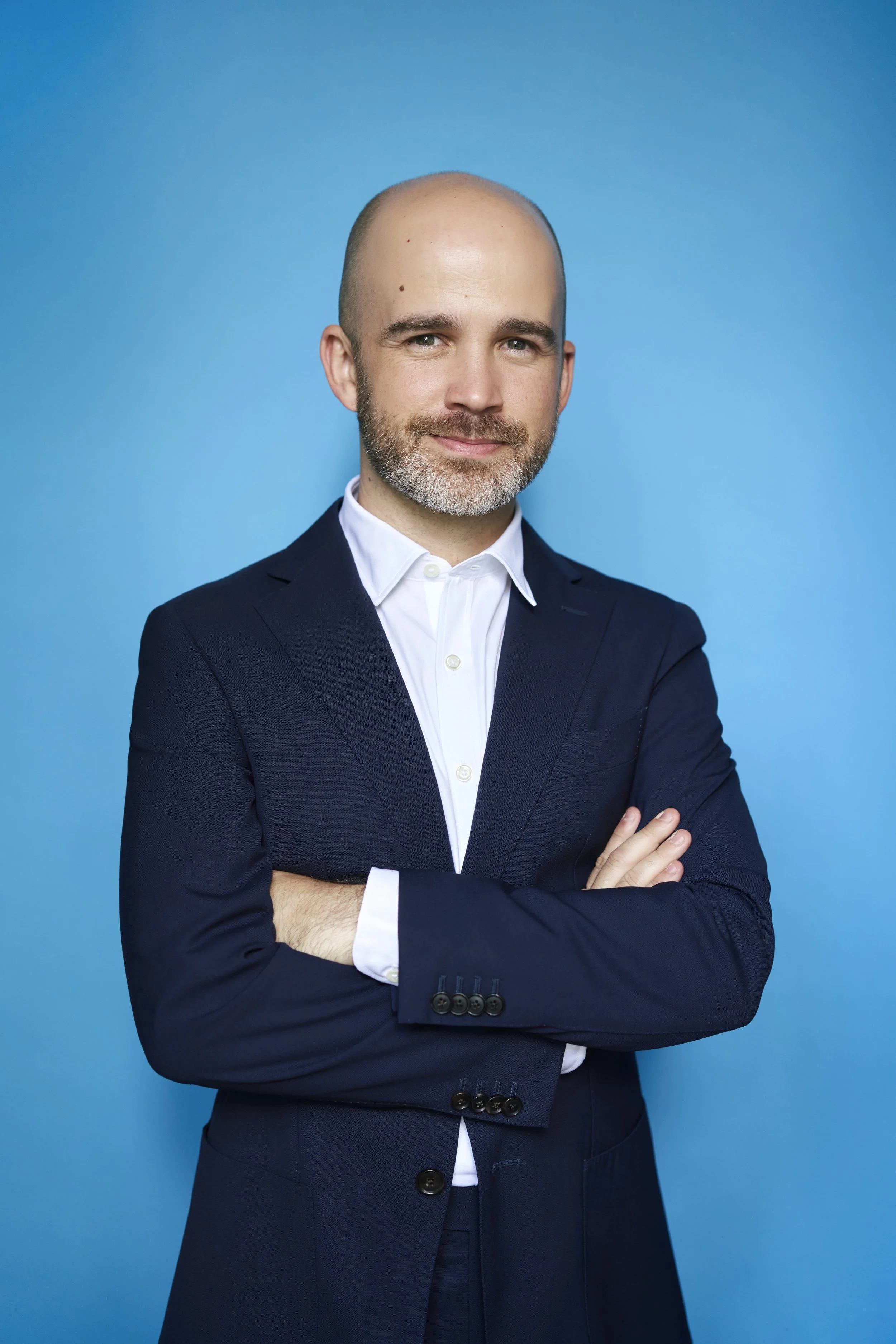
Zachary Wilder, tenor
Making his Haymarket debut in the title role, tenor Zachary Wilder has established himself as a leading interpreter of 17th- and 18th-century repertoire, from Monteverdi to Mozart. His artistry and dramatic commitment have earned him invitations from some of the world’s most distinguished conductors and ensembles on both sides of the Atlantic. He collaborates regularly with renowned ensembles such as Pygmalion, L’Arpeggiata, Les Arts Florissants, Les Talens Lyriques, Le Concert d’Astrée, the Boston Early Music Festival, Bach Collegium Japan, the Monteverdi Choir, The English Baroque Soloists, the Handel & Haydn Society, the Nederlandse Bachvereniging, and the Nederlands Kamerkoor. Chicago audiences may remember Wilder’s notable performances in the 2017 trio of Monteverdi operas presented by the Monteverdi Choir at the Harris Theater.
A troupe of soloists portrays the gods, nymphs, shepherds, and spirits that populate ancient Thrace and the mythical underworld. The cast features Ryan Belongie, Evan Bravos, Hannah De Priest, Emily Fons, David Govertsen, Patrick Kilbride, Kimberly McCord, Emily Mwila, Alexis Peart, Leo Radosavljevic, and Michael St. Peter.

Chase Hopkins, Stage Director
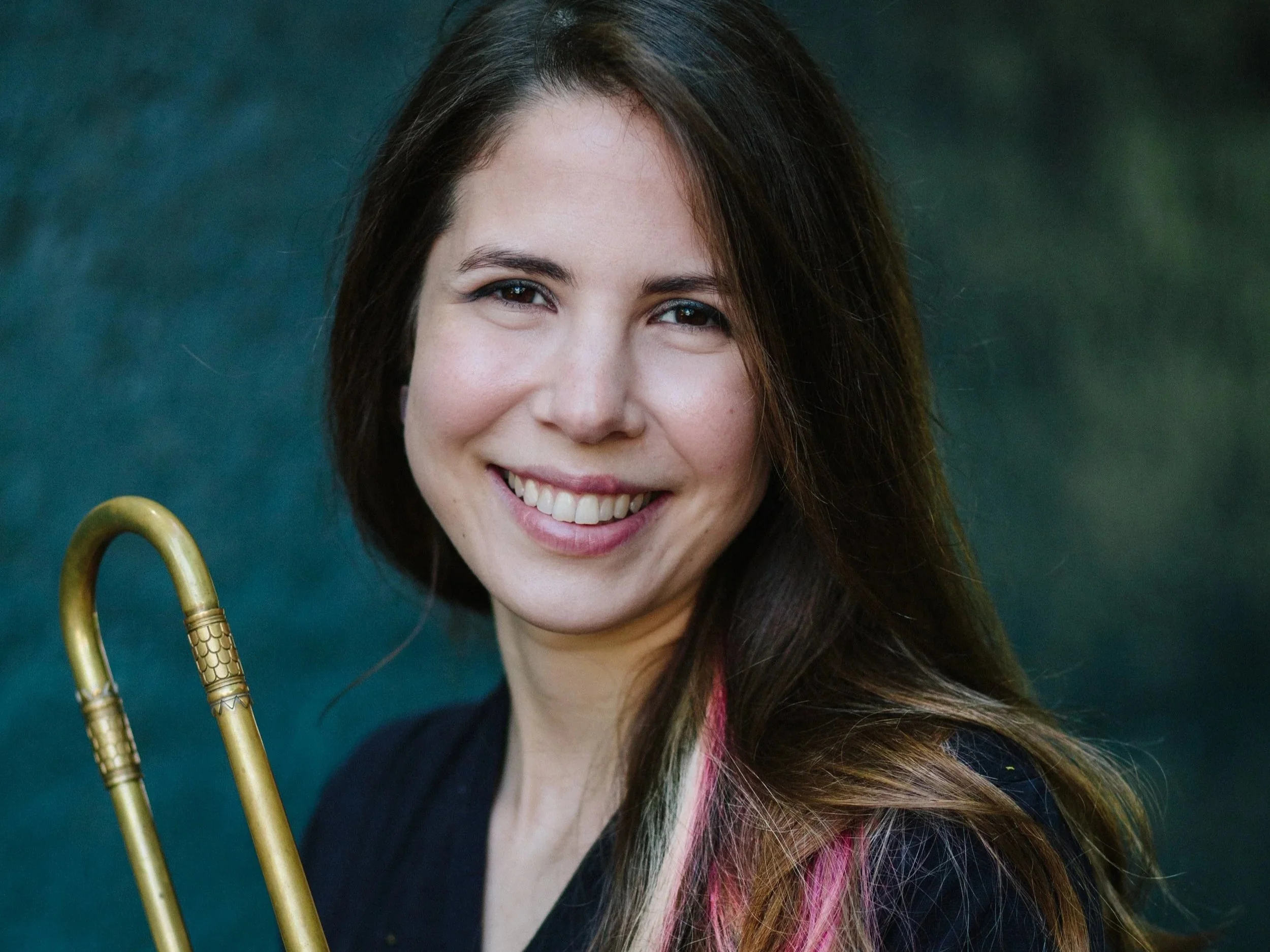
Liza Malamut, Music Director
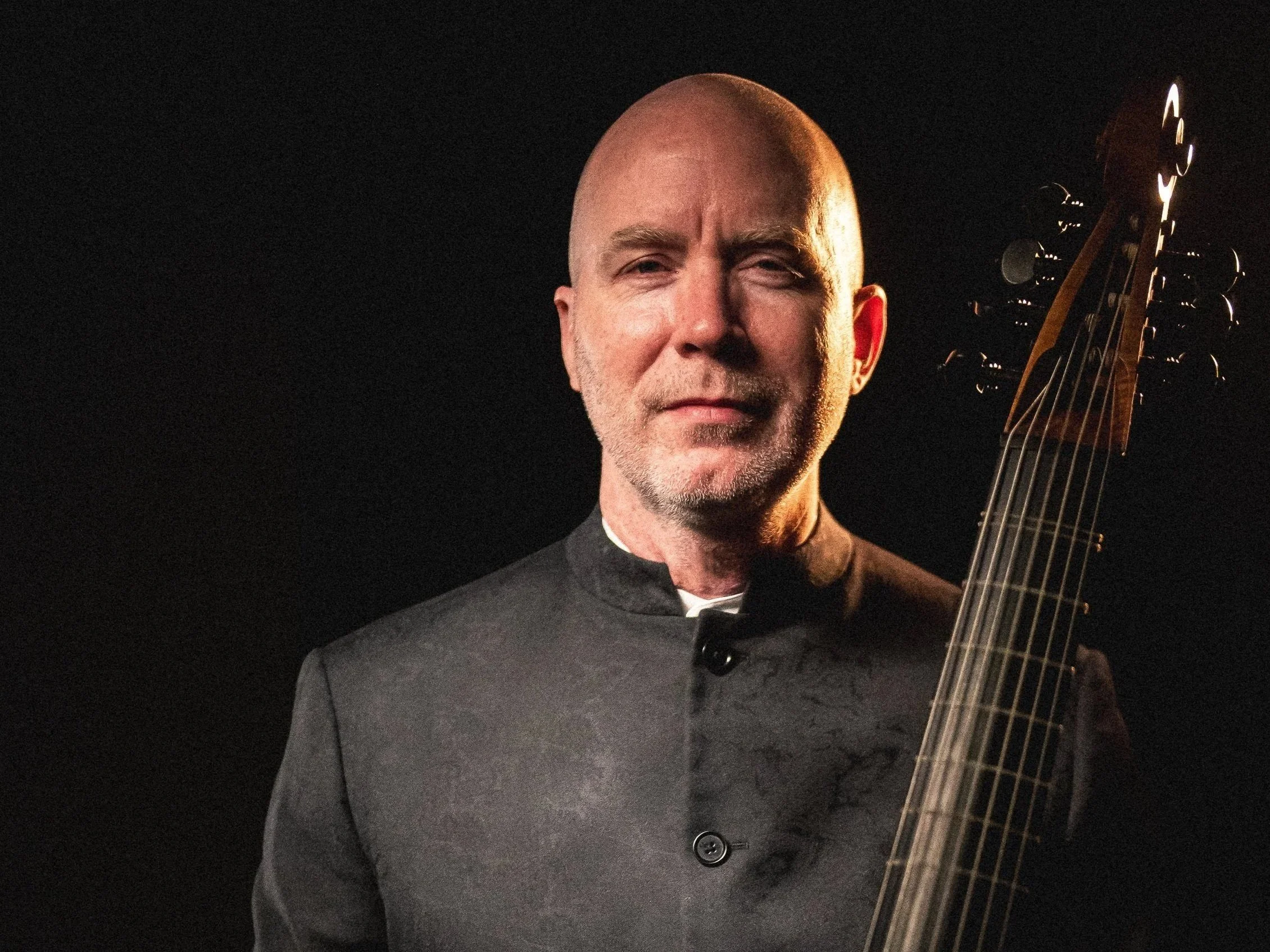
Craig Trompeter, Music Director
Haymarket Opera Company Artistic Director Craig Trompeter and The Newberry Consort Artistic Director Liza Malamut bring together an ensemble of early-music specialists to perform Monteverdi’s inventive score on period instruments including cornetti, sackbuts, recorders, violins, viola da gamba, lirone, harp, lutes, organ, and harpsichord. Craig Trompeter, praised for “vitality and great sensitivity” (Chicago Classical Review), returns to the podium to lead the ensemble of 17th-century instruments.
Chase Hopkins returns for his third production as stage director after his "skillful" (Chicago Classical Review) debut in 2023 leading a production of Hasse's Marc'Antonio e Cleopatra, and his 2024 staging of Handel's Tamerlano, praised as "another impressive achievement" (Opera Magazine). Hopkins is joined by Haymarket collaborators including set designer Wendy Waszut-Barrett, costume designer Stephanie Cluggish, wig and make-up designer Megan Pirtle, and choreographer Sarah Edgar, and assistant director Hannah Zizza Stanfield. Accomplished early music specialist and lighting designer Kelly Martin and prop designer Brett Baleskie make their Haymarket debut.
Creative Team
Stage Director: Chase Hopkins
Music Directors: Liza Malamut and Craig Trompeter
Set Designer: Wendy Waszut-Barrett
Costume Designer: Stephanie Cluggish
Wig Designer and Lead Makeup Artist: Megan E. Pirtle
Lighting Designer: Kelly Martin
Prop Designer: Brett Baleskie
Dramaturg: Louise K. Stein
Choreographer: Sarah Edgar
Assistant Director: Hannah Zizza Stanfield
Cast
(In alphabetical order)
Ryan Belongie, countertenor
Evan Bravos, baritone
Hannah De Priest, soprano
Emily Fons, mezzo-soprano
David Govertsen, bass-baritone
Patrick Kilbride, tenor
Dorian McCall, bass-baritone
Kimberly McCord, soprano
Emily Mwila, soprano
Alexis Peart, mezzo-soprano
Leo Radosavljevic, bass-baritone
Michael St. Peter, tenor
Zachary Wilder, tenor
Jonathan Woody, bass-baritone
Orchestra
Conductor: Craig Trompeter
Cornetto: William Baxtresser, Nathaniel Cox
Trumpet (clarino): Ryan Berndt
Sackbut I & Trumpet: Liza Malamut
Sackbut II & Trumpet: Ben David Aronson
Sackbut III & Trumpet: Paul Von Hoff
Sackbut IV: Andrés Guzmán
Sackbut V & Trumpet: Garrett Lahr
Violin I: Jeri-Lou Zike
Violin II: Martin Davids
Viola I: Wendy Benner
Viola II: Allison Selby Cook
Bass violin: Anna Steinhoff
Bass: Jerry Fuller
Recorder I: Lisette Kielson
Recorder II: Laura Osterlund Klehr
Lute & ceterone: Brandon Acker, Nathaniel Cox, and Lucas Harris
Harpsichord: Jason Moy
Organ: Jacob Reed
Regal: Gwendolyn Toth, Dongsok Shin
Harp: Claire Happel-Ashe
Production Team & Run Crew
Production Manager: Jen Smith
Head Electrician & Technical Supervisor: Aaron Lichamer
Stage Manager: Alycia Martin
Assistant Stage Manager: Nathalie Cohen
Floor Manager: Mary Dixon
Stage Crew: Darby H. Thurston, Frankie Grimaldi, TBD
Wardrobe Supervisor: Anne Marie Berman
Assistant Costume Designer and Dresser: Alix Burkhardt
Dresser: Ace Lee
Draper: Beth Uber
Wig and Make-up Assistant: Bella Strel
Wig & Makeup Artist: Krista D’Agostino, Aliza Feder
Light Board Operator: TBD
Program Note: Louise K. Stein
Surtitle Translator: Craig Trompeter
Projected Titles Operator: Shawn Keener
Ushering support provided by The Saints: Volunteers for the Performing Arts
Synopsis
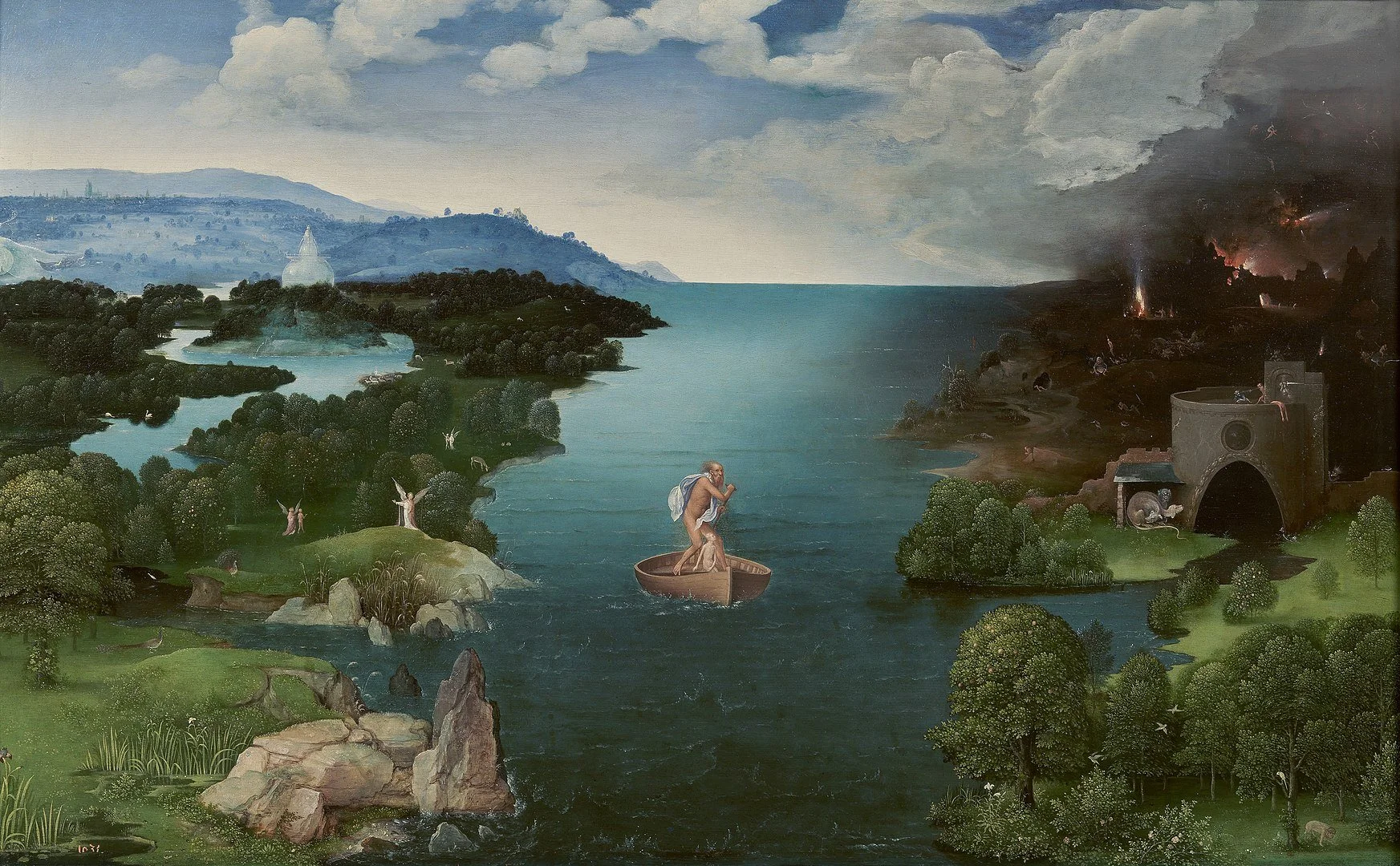
Joachim Patinir (c. 1480–1524), Landscape with Charon Crossing the Styx, c. 1515–1524. Oil on panel, Museo del Prado, Madrid.
L’Orfeo (1607) recounts the story of Orpheus, a legendary mortal musician whose beautiful songs charm humans, animals, and even the gods. When his beloved Eurydice dies from the bite of a venomous snake on their wedding day, Orpheus boldly descends into the Underworld to wrest her from the clutches of death. Pluto, King of Hades, is charmed by Orpheus’s voice and musical virtuosity, so he releases Eurydice on the condition that Orpheus not look back at her until they reach the world of the living. Overcome by human doubt, Orpheus turns to glance at her too soon and loses Eurydice forever. Heartbroken, he returns to Thrace, vowing never to love again. Apollo, god of music, hears his laments and lifts Orpheus to the stars where he may embrace Eurydice for eternity.
About the composer
Claudio Monteverdi (1567–1643) was a prolifically original Italian musician who became the most influential composer of his time in both sacred and secular genres. His career began in his native Cremona before he was recruited to serve the Gonzaga court in Mantua, where he composed madrigals and music for court entertainments, including his groundbreaking masterpiece, L’Orfeo (1607), followed by the mostly lost L’Arianna (1608). In 1613 he relocated to Venice upon his appointment to the prestigious position of maestro di cappella at St. Mark’s Basilica, though he continued to fulfill commissions for the Gonzaga and other patrons. In Venice he not only revitalized the repertory of the basilica but continued to produce innovative concerted madrigals, a monumental collection of sacred music (Selva morale e spirituale), and his striking late operas, Il ritorno d’Ulisse in patria and L’incoronazione di Poppea.
About the librettist
Alessandro Striggio the Younger (c. 1573–1630), son of the composer Alessandro Striggio the Elder, was an Italian court poet and librettist esteemed at the Gonzaga court in Mantua. He is best remembered for his collaborations with Claudio Monteverdi, having provided the libretto for L’Orfeo (1607), the first operatic masterpiece, and L’Arianna (1608) with its affecting and widely circulated “Lamento d’Arianna.” Striggio was a member of the noble Accademia degli Invaghiti that commissioned Monteverdi’s L’Orfeo.
The collaboration continues: From Peri to Monteverdi
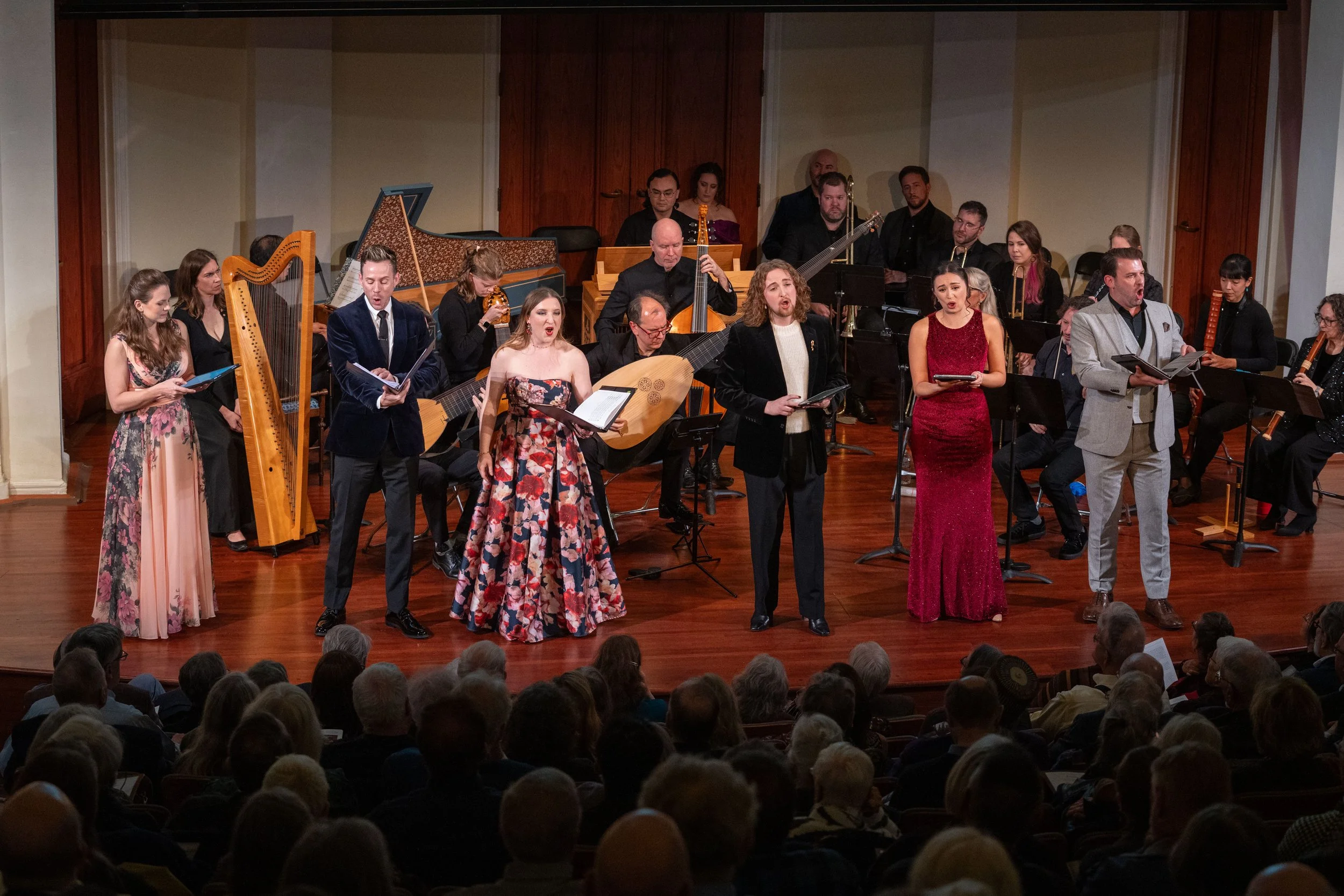
Euridice, Haymarket Opera Company and The Newberry Consort, 2025. Photo: Elliot Mandel.
Following a 2025 presentation of Jacopo Peri’s Euridice, the oldest surviving opera, Chicago's acclaimed historical-performance ensembles Haymarket Opera Company and The Newberry Consort join forces for a second collaboration, returning to the tale of Orpheus through a new, fully staged production of Claudio Monteverdi’s timeless opera, L’Orfeo. While Jacopo Peri’s La Dafne was the first-ever operatic experiment and his Euridice is the first complete opera to survive, Monteverdi’s L’Orfeo claims its place as the cornerstone of the genre. Our collaboration offers Chicago audiences an opportunity to luxuriate in this masterpiece of early Italian opera, staged, sung, and played by two of Chicago’s most celebrated early music ensembles.
The Gonzaga family in Mantua had long invested in courtly musical and dramatic entertainments, sometimes sharing musicians with the Medici in Florence. In 1600, while visiting Florence for the wedding of Maria de’ Medici to King Henry IV of France, Duke Vincenzo Gonzaga attended the premiere of Peri’s Euridice. It may be that his principal musicians, including Monteverdi, as well as the poet Alessandro Striggio, formed part of his entourage and thus heard Peri’s opera. Seven years later, after some sixteen years as a composer and arranger of entertainment music for the Gonzaga court, Monteverdi knew his elite audience. With Striggio’s poetry, he created an enthralling new opera that served the intellectual, humanistic, and artistic interests of the Gonzaga courtiers. Fundamentally, L'Orfeo explores the power of song and the superiority of intellect over mere brawn. Orfeo is an expressively elegant mortal consumed by his very human passions. Clothed in Monteverdi’s innovative music, he becomes a hero of the courtly world and late Renaissance self-confidence.
About The Newberry Consort
The Newberry Consort brings together singers and instrumentalists of the highest caliber to create historically informed performances of music from the Middle Ages, the Renaissance, the baroque, and beyond. By integrating historical performance and research with contemporary themes and multimedia, The Newberry Consort inspires audiences, musicians, and scholars, providing a window into earlier times and diverse cultures while uplifting Chicago’s early-music community through mentorships, teaching, and the engagement of local artists.
Haymarket Production Sponsorship
2026 Season Sponsors
Nancy Dehmlow, Ethel Gofen, Axel Kunzmann and Bruce J. Nelson, Greg O’Leary and Patricia Kenney, Theodore and Emilysue Reichardt, Candace Rudmose, Lynne and Ralph Schatz, and Pam and Doug Walter
Lead Production Sponsors
Amata Office Suites, Larry and Julia Antonatos, Timothy R. and Janet Fox, Jerry and Patricia Fuller, Byron Harrison and Brian Klinksiek, David J. Rice, Nancy Schmitt, Marjorie Stinespring, and Michael and Jessica Young
Supporting Production Sponsors
Gail Belytschko, Debra L. Cox, Debbie Crimmins and Paul Goerss, The Lemont Fund at The Chicago Community Foundation, and Alexander Ripley and Edward Steinemann
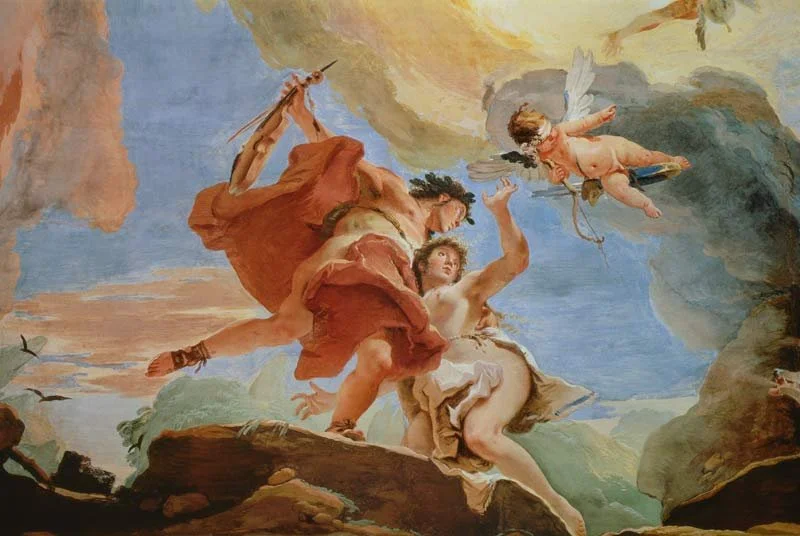
Giovanni Battista Tiepolo (1696–1770), Orpheus Rescuing Eurydice from the Underworld (ceiling detail), c. 1737–1738. Fresco, Palazzo Sandi-Porto (Cipollato), Venice.
If you require access support to fully participate or have any questions about accessibility, please contact us at info@haymarketopera.org. To ensure the best experience, please try to contact us at your earliest convenience.