
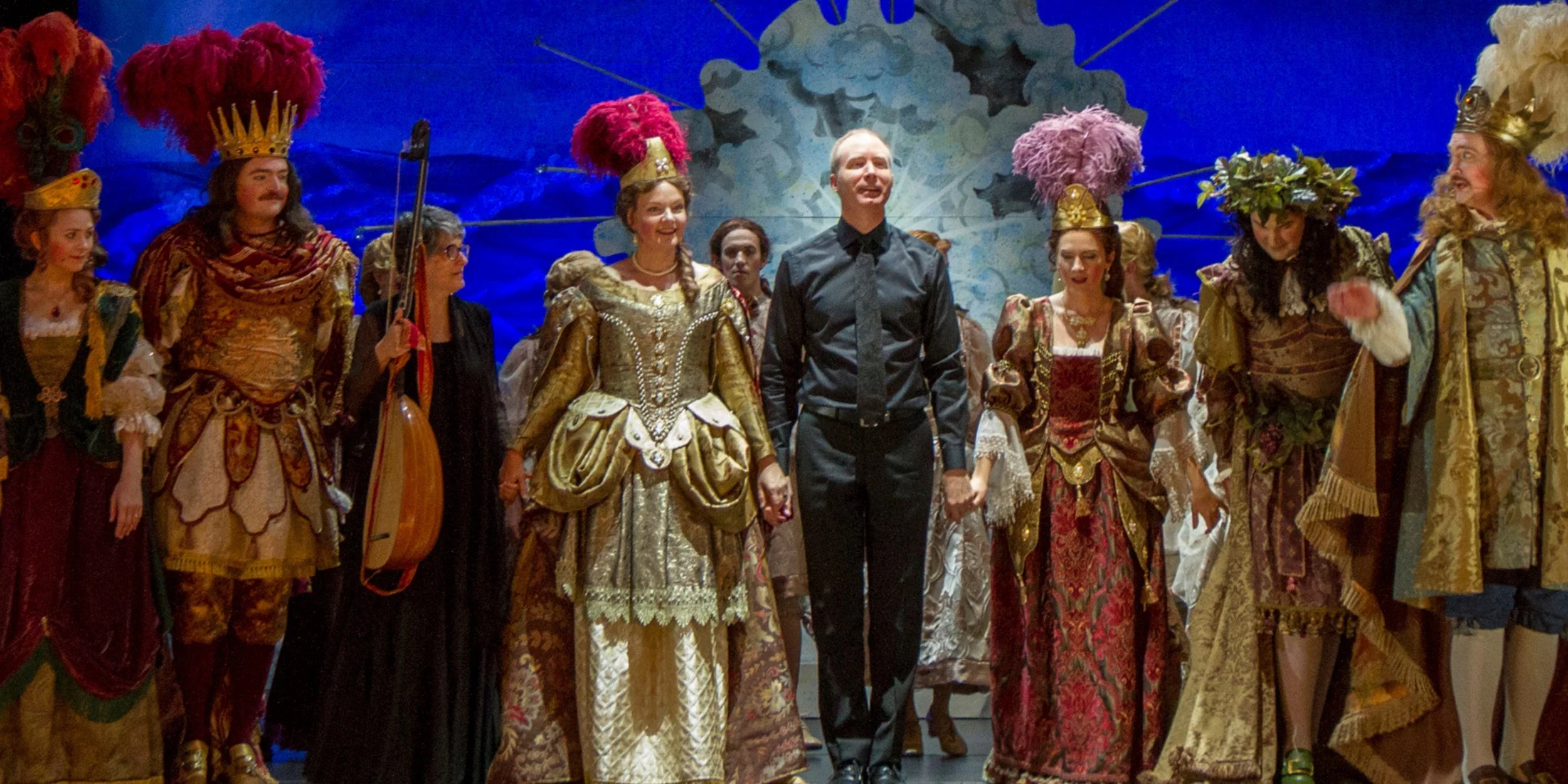
Ariane et Bacchus, Haymarket Opera Company, 2017.
Founder and Artistic Director Craig Trompeter looks back in celebration of Haymarket’s 15th Anniversary
Haymarket’s 15th anniversary belongs not only to the artists who have worked together through these many years but also to our beloved audiences, supporters, and collaborators who have kept our mission alive. Looking back fills me with many emotions—gratitude, admiration, and love, as well as feelings that defy description. Laughter and joy have always accompanied the hard work at Haymarket.
Since childhood, I’ve been fascinated by musical repertoires that include the singing voice: medieval chant, Renaissance choral works, madrigals, opera, and song literature. I’ve always loved languages and the nitty gritty of diction and vocal production. In my earlier professional life as a cellist, violist da gamba, and keyboard player, there never seemed to be enough opportunities to perform this great literature. I was eager to start something new.
The idea for an early opera company came to me in 2010. Having played wonderful works by Handel, Cavalli, Monteverdi, and Charpentier with Chicago Opera Theater, I could see that Chicago opera lovers were eager to hear more of the vast store of 17th- and 18th-century works that had faded from the collective conscience. Despite the economic downturn, the time seemed right to take a bold leap into a brand-new venture.

Italian Opera House (King’s Theatre), Haymarket, before 17 June 1789. Reproduction postcard after an original print published in Historical and Literary Antiquities. H. R. Beard Collection (F94-14, TM 376), Victoria and Albert Museum, London.
Finding a meaningful and appropriate name for a musical group can be surprisingly difficult. My parents, both social workers, had been learning about Chicago’s Haymarket Affair—the 1886 conflict between police and workers’ rights advocates that helped spark the international labor movement. After one of their visits, I was out walking our dog Oliver when a thought flashed into my head: the theater where Handel produced his Italian operas was located in London’s Haymarket district. Voilà! The perfect name for a Chicago ensemble devoted to early opera had arrived as if from on high.

Live from WFMT, featuring members of the Haymarket Opera Orchestra including Jeri-Lou Zike and Susan Rozendaal, Haymarket Opera Company, 2017.
The risks were daunting. It might have been Rudolf Bing, the Metropolitan Opera’s legendary leader, who quipped that the only thing more expensive than opera is war. I would be dishonest if I said I knew what I was getting into—or how to build and sustain an opera company. But nothing ventured, nothing gained. I began a kind of “coming out” process by sharing my dream with a few trusted friends. Dear friends like Jeri-Lou Zike, Susan Rozendaal, and Sally Jackson offered enthusiastic support and rolled up their sleeves to help.
The staff and volunteers at Lawyers for the Creative Arts guided me through the legal process of incorporation and nonprofit registration. The application sailed through the various agencies and was approved in what I’m told was record time. When we announced Haymarket Opera Company publicly, the groundswell of excitement and offers of help from colleagues, friends, and loved ones filled our sails. Naming officers and holding our first official board meeting were among the final steps. My husband David and I met with my dear friend Russell Wagner at Broadway Cellars (now closed) in Edgewater. Russell arrived in a three-piece suit—a touching sign of his commitment to Haymarket’s success.
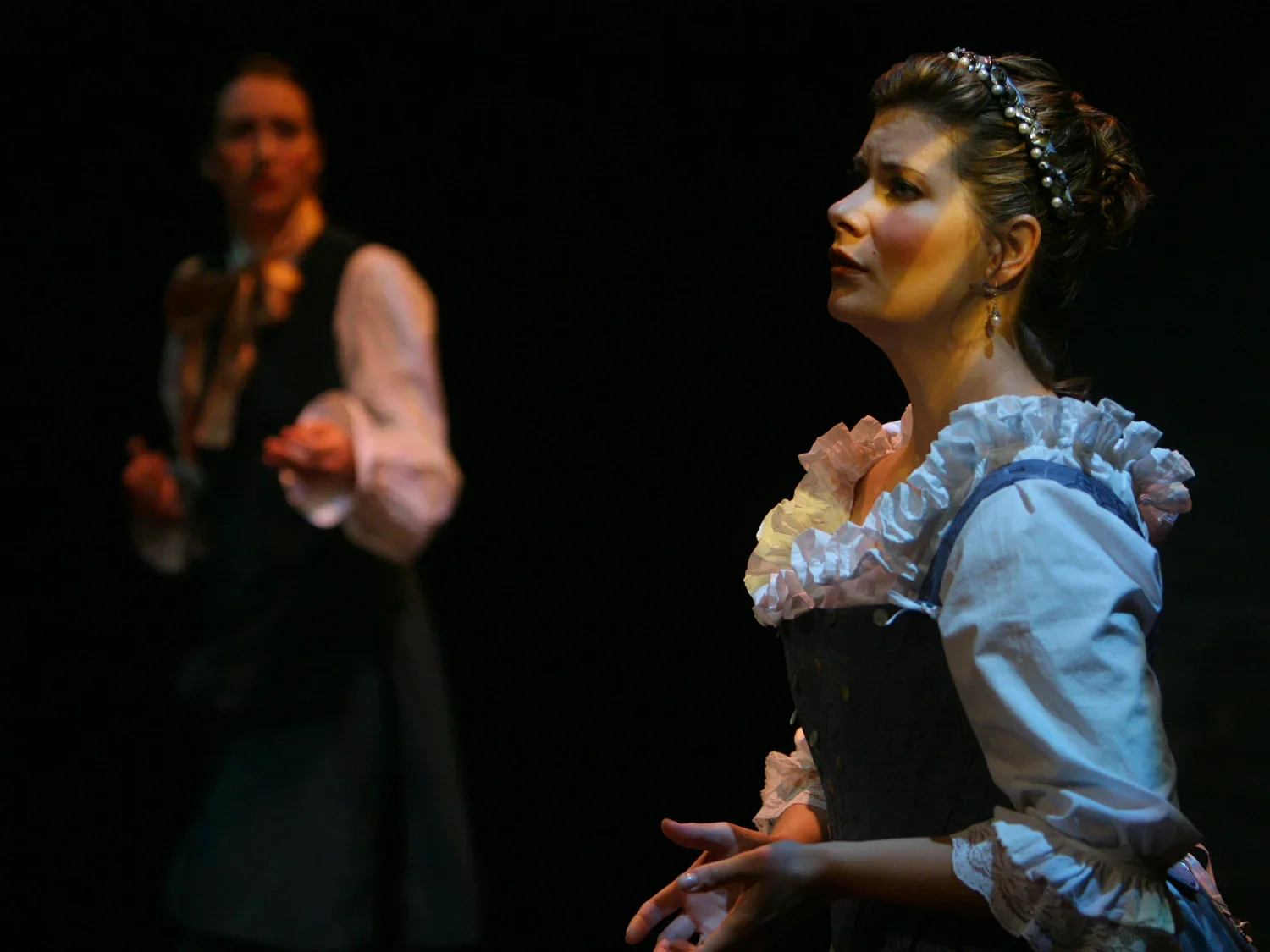
Aci, Galatea e Polifemo, Haymarket Opera Company, 2011.
Where to hold our first performances? It was Russell’s idea to explore Mayne Stage, a small theater in Rogers Park. With its good sightlines and cabaret-style seating, this charming venue became our home for five gloriously fun years. Some longtime followers will remember our 2011 debut there: Handel’s Aci, Galatea e Polifemo. I chose it for its poignant story of transformation—Acis turned into a fountain after his death at the giant hand of Polyphemus—and for its wealth of sublime music.
A recording of Polifemo’s aria “Fra l’ombre,” sung by English bass David Thomas, had haunted me for years. It still amazes me that a 23-year-old composer could write something so profoundly beautiful. I was determined to perform it once I found a bass capable of its extreme range—from high A-flat to a D two-and-a-half octaves below. During Messiah rehearsals at a local church, I heard bass Benjamin LeClair’s resonant voice for the first time and thought he might have the chops for the role. Soon after, I worked with mezzo-soprano Angela Young Smucker, whose chocolaty tone seemed perfect for Galatea, and Dutch soprano Josefien Stoppelenburg arrived in Chicago—my dream cast was complete. Our debut audiences at Mayne Stage rose to their feet to applaud this little-known early Handel masterpiece. Our period-instrument orchestra included my beloved friend Paul Nicholson on harpsichord. Paul is gone now, but I still see his face and hear his playing whenever I revisit this treasured score.
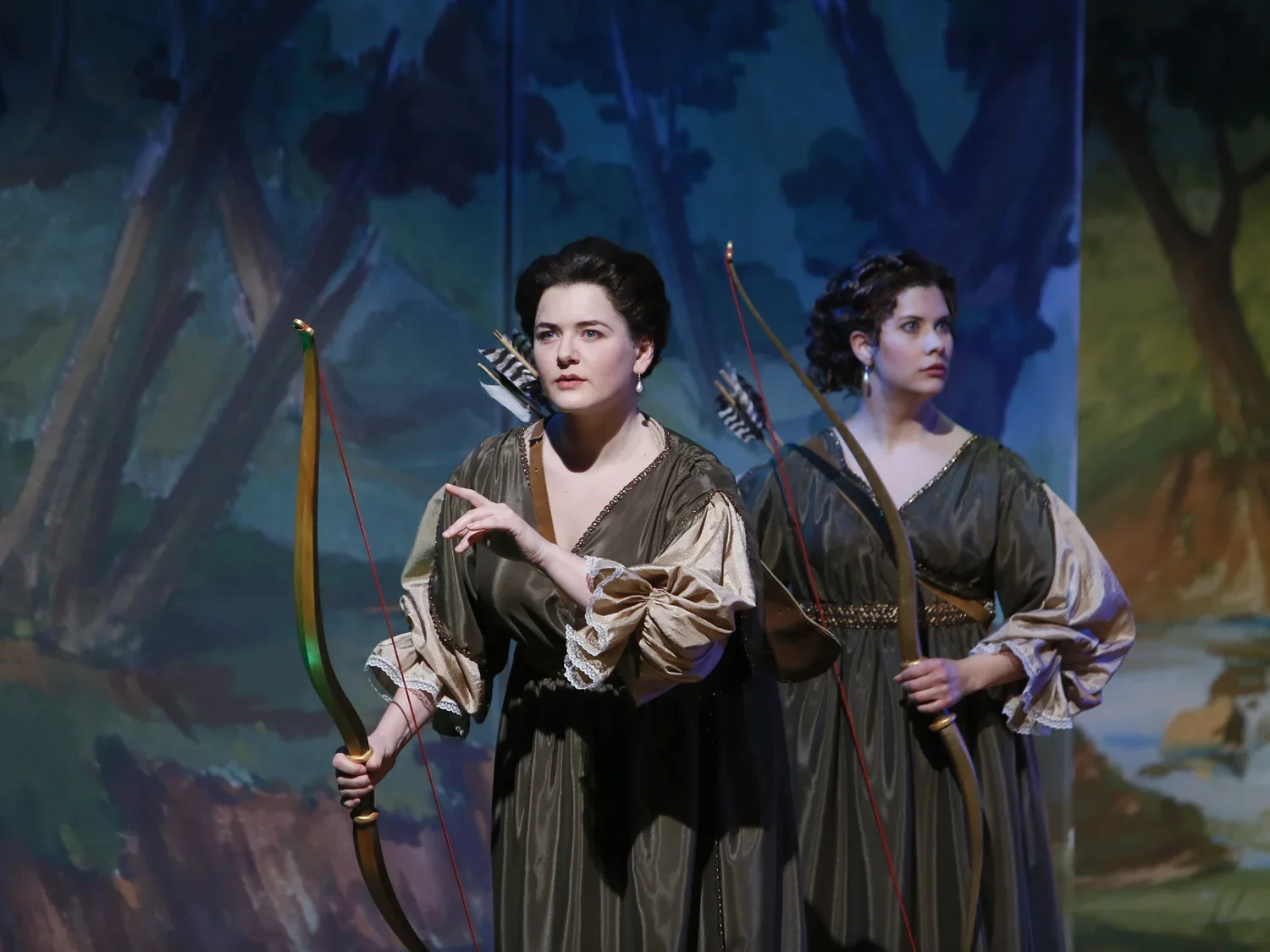
Actéon, Haymarket Opera Company, 2014.
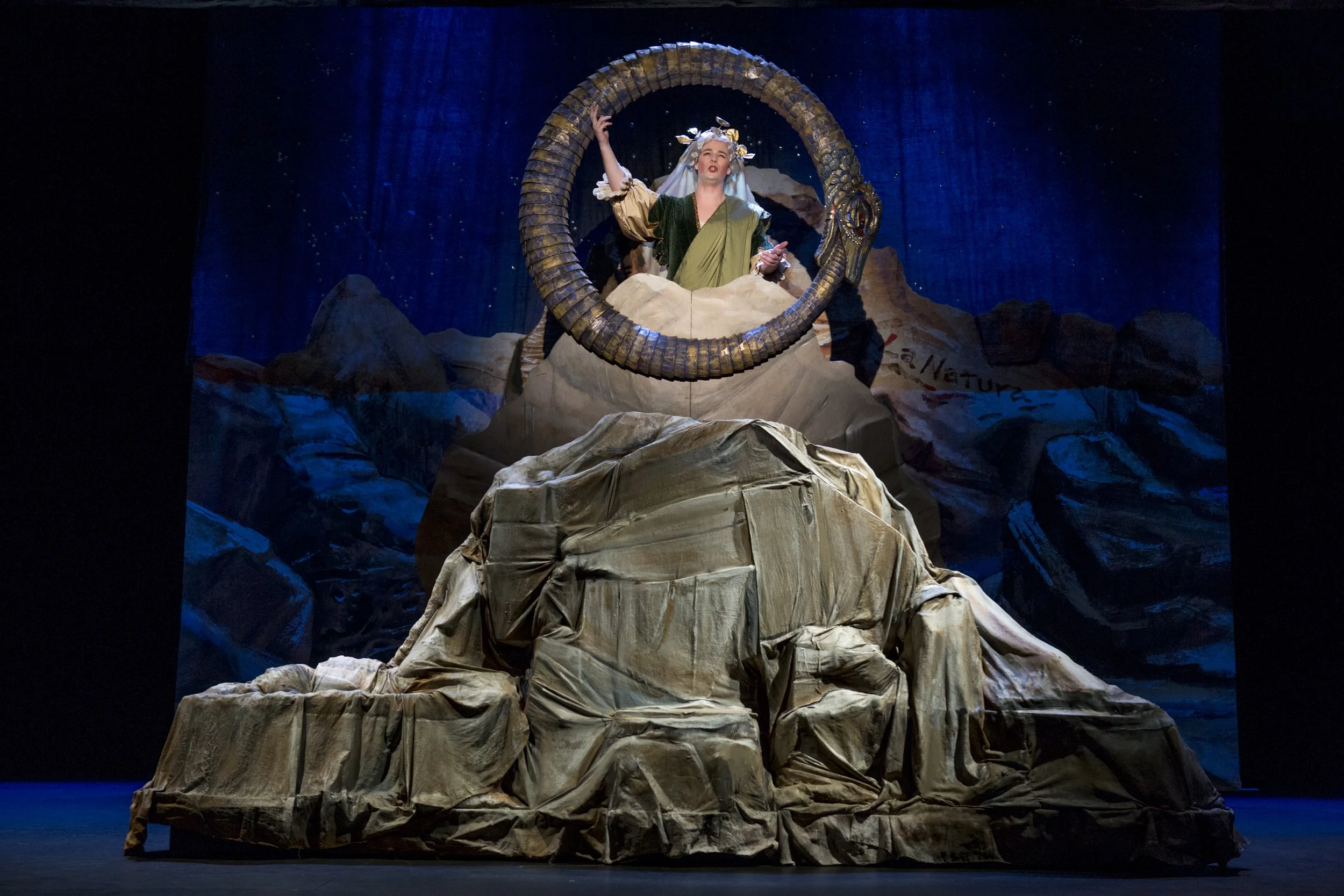
La Calisto, Haymarket Opera Company, 2016.
Our stage director for the first several productions was Baroque specialist Ellen Hargis, who brought her immense knowledge of gesture to works like Charpentier’s La Descente d’Orphée aux Enfers and Actéon, as well as Purcell’s Dido and Aeneas. Dance specialist Sarah Edgar made her opera directorial debut with a hilarious staging of Telemann’s Pimpinone, starring Erica Schuller and Ryan de Ryke. I’ll never forget the audience’s riotous laughter during the athletic fight scene between these two extraordinary singers.
We were off to a wonderful start—but daily challenges soon followed. One of our first hurdles came when the management of Mayne Stage told us they could no longer host us. We had already planned an elaborate production of Cavalli’s La Calisto and suddenly found ourselves without a home. Our fearless and tenacious board, led by president Sarah Harding and treasurer Rupert Ward, quickly pivoted to the Athenaeum Theatre. After we successfully mounted La Calisto, the board took another leap of faith with Haydn’s L’isola disabitata, requiring a large Classical orchestra. This was my official debut as a conductor—no instrument or bow in hand! Haydn’s score, largely one long accompanied recitative, was a trial by fire for both orchestra and conductor. But our cast, led by Kimberly McCord and Scott Brunscheen, and the musicians of the Haymarket Opera Orchestra, were all warm and encouraging as I learned the ropes (and conducting patterns!).
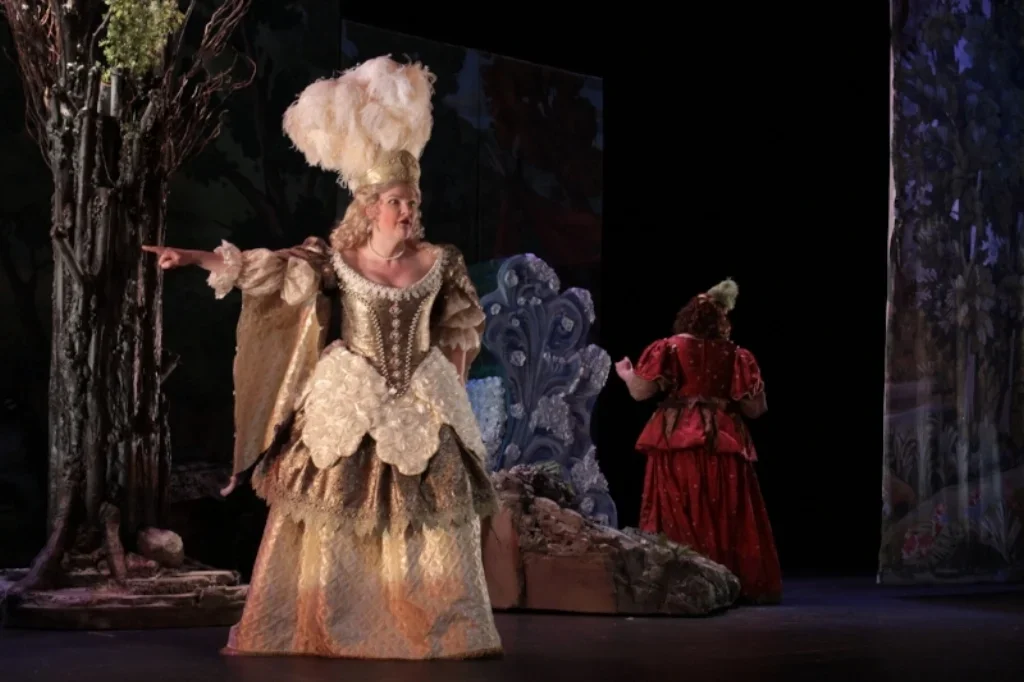
La Calisto, Haymarket Opera Company, 2016.
After the Haydn’s success, we prepared our most ambitious project yet: the modern-day world premiere of Marin Marais’s Ariane et Bacchus. I worked closely with the wonderful lutenist and musicologist Silvana Scarinci, who prepared the first modern edition from manuscript. Board member Mary Mackay and her husband Edward Wheatley, both fluent in French, painstakingly produced a critical edition of the text and English translation. Meriem Bahri researched and designed gorgeous 17th-century costumes. We were poised for success—until our theater canceled the contract. Once again, our leadership team, including executive director Dave Moss (2018–2019), rallied to secure a new home at the Studebaker Theater on Michigan Avenue, where we flourished for several seasons with Chicago premieres by Marais, Cesti, and Lampe.
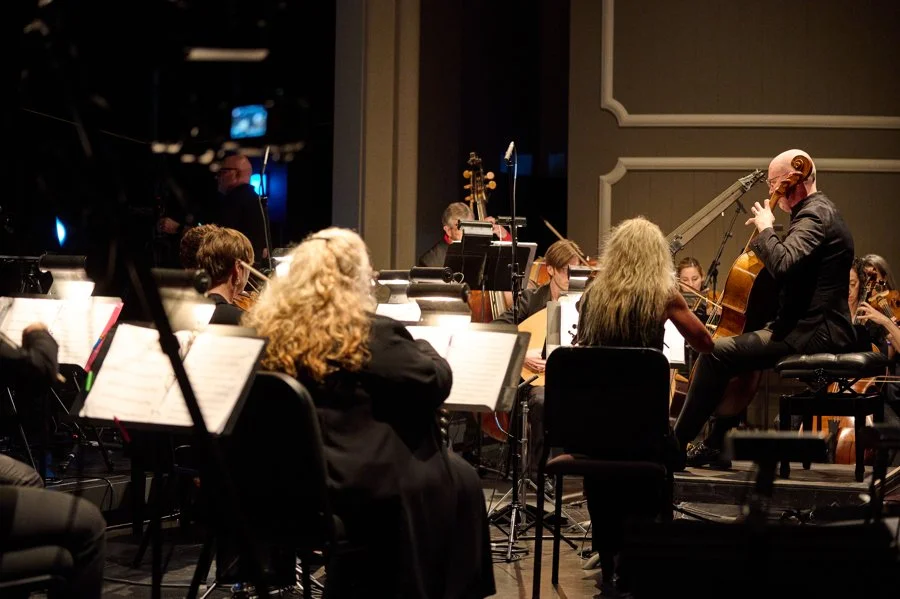
Filming Orlando, Haymarket Opera Company, 2021. Photo: Anna Cillan.
Of course, the greatest challenge came with the COVID-19 pandemic, which took so many lives. Chase Hopkins had just stepped into the role of interim general director in March 2020 as the crisis unfolded. There could not have been a more difficult trial period for a new leader. I still marvel at how confidently Chase guided us through those murky months with grace and skill. Pivoting to film three Handel works was both exhilarating and fulfilling despite the many unknowns of virtual production. I remain forever grateful to Chase, our board of trustees, and our loyal supporters who kept Haymarket alive during those dark times.
Haymarket has always been guided by a clear artistic mission and an unwavering commitment to excellence. Under Chase’s leadership and with our dedicated board, we continue to grow sustainably. At first glance, 17th- and 18th-century opera may seem limited in scope, but we have found a rich vein of golden repertoire. The distance between Jacopo Peri’s Euridice (1600), which we recently presented with The Newberry Consort, and the Chevalier de Saint-Georges’s L’Amant anonyme (1780), which we recorded in 2022 with Cedille Records, could hardly be greater. This breadth demands deep research and artistry from every member of our team.
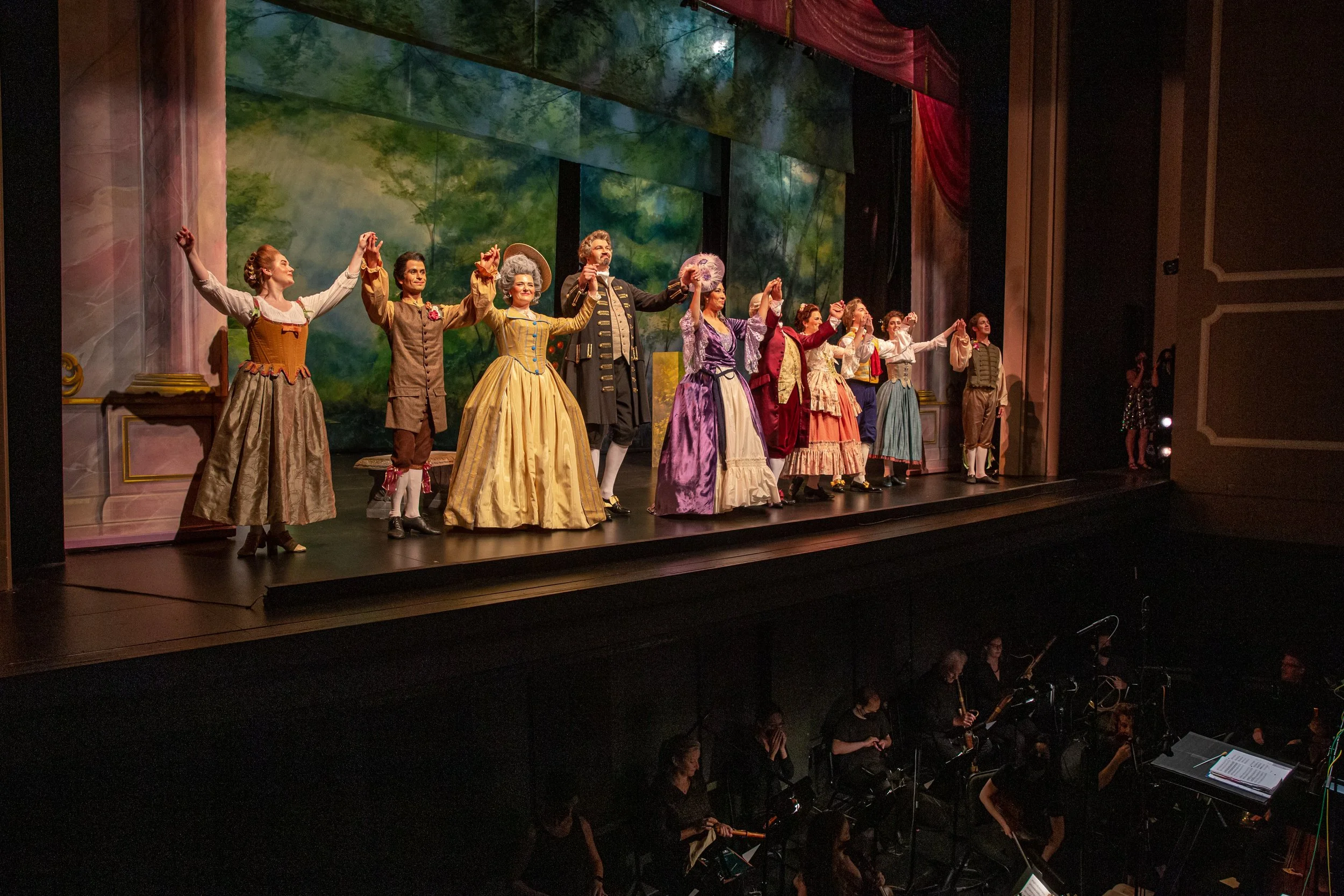
L’Amant anonyme, Haymarket Opera Company, 2022. Photo: Elliot Mandel.
With the creativity of stage designer Wendy Waszut-Barrett, costume designer Stephanie Cluggish, wig and makeup artist Megan Pirtle, lighting designer Brian Schneider, production manager Jen Smith, and our extraordinary performers, audiences can always expect productions that are both beautiful and full of surprises.
And it’s no exaggeration to say our audience feels like family. Their warmth and generosity make all the labor worthwhile. Every post-performance celebration feels like a reunion—my favorite people gathered to celebrate art. One of my guiding principles, nurtured by years of study in the Feldenkrais Method® of somatic education, is to learn something new every day. Watching my colleagues and our passionate audiences discover music none of us had known before has been profoundly rewarding. Exploring unfamiliar repertoire enriches the collective conscience. As we boldly begin our next chapter, I am grateful to work among friends and colleagues who share a passion for the power of the arts to bring joy and discovery to our community.
About the author

Craig Trompeter is the founder and artistic director of Haymarket Opera Company, one of North America’s leading ensembles dedicated to historically informed performance. As a conductor, he has led operas spanning the early Baroque to the Classical period, including works by Francesca Caccini, Monteverdi, Gluck, the Chevalier de Saint-Georges, and numerous operas and oratorios of Handel.
An accomplished cellist and violist da gamba, Trompeter has performed with ensembles such as Second City Musick, the Chicago Symphony Orchestra, Lyric Opera of Chicago, Chicago Opera Theater, Music of the Baroque, the Smithsonian Chamber Music Society, and the Oberlin Consort of Viols. He has appeared at venues including the Metropolitan Museum of Art, the Art Institute of Chicago, the Glimmerglass Festival, the Brooklyn Academy of Music, and the Valletta International Baroque Festival in Malta. He has also been featured as a soloist with the Chicago Symphony Orchestra, Music of the Baroque, the Ravinia Festival, and the American Bach Society.
Trompeter’s discography includes works by Heinrich Biber, Joseph Bodin de Boismortier, Joseph Bologne, Henry Eccles, Maurice Greene, George Frideric Handel, Marin Marais, Wolfgang Amadeus Mozart, Leonardo Vinci, Antonio Vivaldi, and a range of Elizabethan composers, recorded on the Harmonia Mundi, Cedille, and Centaur labels.
A dedicated educator, Trompeter has conducted operas at DePaul University and Utah State University (Logan, UT), taught Baroque performance practice at Northwestern University, and served as director of the Early Music Ensemble at the University of Chicago for seven seasons. He is a guild certified teacher of the Feldenkrais Method® of somatic education.
About The Haymarket Review: This new digital publication including thoughts about the work produced by Haymarket is designed to deepen our connection to audiences, nurture and feed audience curiosity about historical performance, offer critical opinions and thoughtful reflections on our performances, and provide a forum for Haymarket and its audience to connect through sharing insights, opinions, learning, and expertise.