

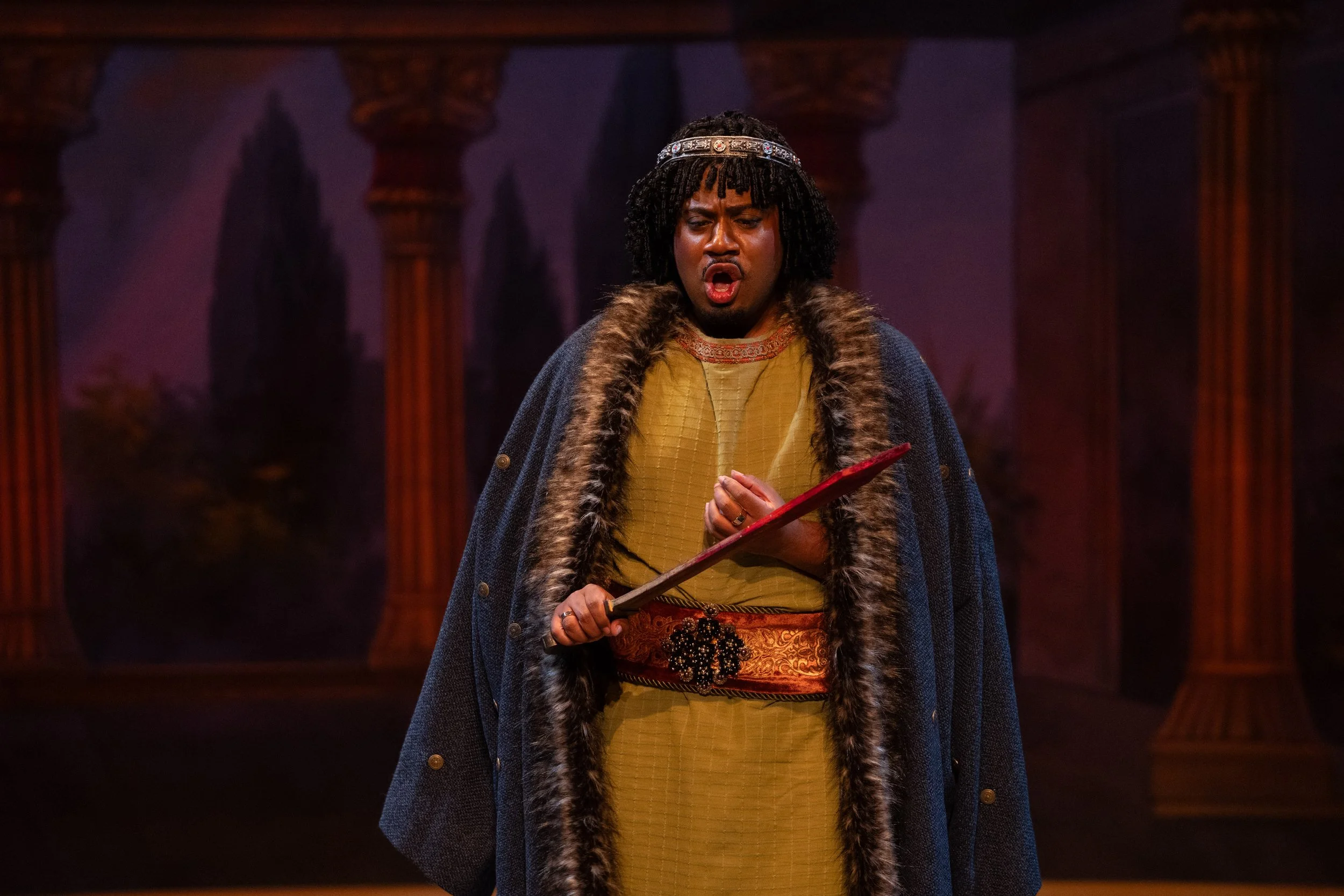
Artaserse, featuring Key’Mon Murrah, Haymarket Opera Company, 2025. Photo: Elliot Mandel
Review, Artaserse, Leonardo Vinci: Haymarket Opera Company
With a plot to rival an Agatha Christie whodunnit, the story of Artaserse provided opera stages with a tale of duplicity, ambition, plotting, and conniving in remote historical times that entertained audiences around Europe throughout the eighteenth century. One of the later composers to take up the theme was Thomas Arne, noted as composer of “the first English opera seria,” while Johan Adolf Hasse (1730) and Josef Mysliveček (1774) also had success with their versions. But the original Artaserse dramma per musica was the result of collaboration between the great librettist Pietro Metastasio and the Neapolitan composer Leonardo Vinci (1690-1730). It premiered in Rome February 1730, the composer’s last masterpiece before his untimely death from unknown causes. The present release was recorded nearly 300 years later, in July 2025.

Artaserse, featuring Elijah McCormack, Haymarket Opera Company, 2025. Photo: Elliot Mandel
This outstanding recording by Haymarket Opera Company continues their exploration of operas from the period between Handel and Mozart, the two icons of eighteenth-century opera. How were the momentous changes of the intervening decades expressed in the creations of composers like Vinci, Hasse, and Nicolò Jommelli, still rarities in opera-house programs? The revival of this rarely performed repertoire, of whom Vinci is a key figure, requires resources of orchestral direction and expertise in period-instrument orchestral performance, and a cast of virtuoso singers able to create a world of vocal and dramatic diversity with breathtaking ease and agility. Haymarket Opera Company, under the committed and sure guidance of Artistic Director Craig Trumpeter, and with the farsighted collaboration of Cedille Records, provides all these resources with exhilarating instrumental and vocal interaction in their new recording of Vinci’s Artaserse.
The most challenging of the performance issues begins with the fact that the original production was cast almost entirely by castrati playing both male and female roles. From the twentieth-century tradition of replacing the male treble roles with female contraltos and occasionally sopranos, historical opera companies such as Haymarket are now able to draw on a much wider range of male alto and soprano voice types, and diverse vocal qualities than in the early days of baroque opera revival. All but one of the soprano roles in this production (Mandane) are played by male voices, displaying the wide range of tessitura, ornamentation styles, and dramatic/vocal quality that we expect of female sopranos and altos in the “traditional” opera company.
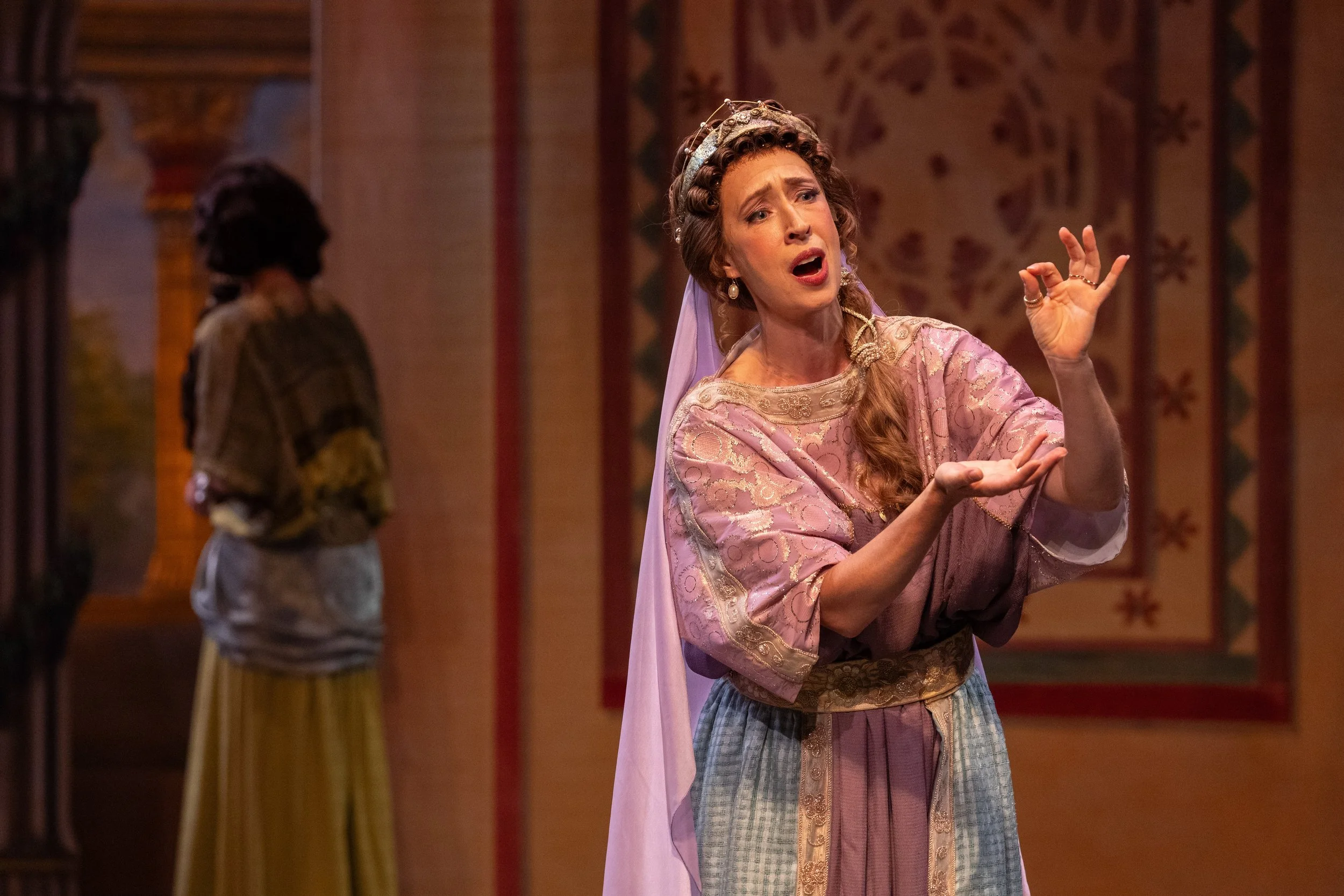
Artaserse, featuring Emily Fons and Elijah McCormack, Haymarket Opera Company, 2025. Photo: Elliot Mandel
Thus the production gives us three countertenors of contrasting ranges and sonority: the regal Artaserse (Kangmin Justin Kim), the much-maligned Arbace (Key’Mon Murrah) who manages to survive the plots against him and marry his love Mandane, and Megabise (Ryan Belongie), a dissatisfied co-conspirator and go-between. Each of these draws on impressive technical agility and a wide vocal range—a feature of the castrati— and can produce thrilling contrasts of their register, whether the rich baritone of Kangmin Justin Kim, or the bright high soprano notes of Key’Mon Murrah. The opera’s two girls, Mandane and Semira, are played respectively by Emily Fons, mezzo, and Elijah McCormick, male soprano, both bringing qualities of tenderness, terror, and rage at the situations in which they find themselves, but winning their lovers in the end. To top the dramatis personae is Artabano, a true villain, who is happy to commit murder and then plant the crime on his son Arbace, who only narrowly escapes being executed. Within a cast of mainly treble voices, the tenor Eric Ferring projects the unmistakable wickedness of his character through his arias.
It is said that the devil has the best tunes, but in this lineup of conflicted characters and unabashed villainy, it is the villain Artabano who has much of the best orchestration in his invigorating arias, “Su le sponde, Non ti son padre” (Act I), “Così stupisce” (Act II), and his attempt to strike a note of genuine remorse in “Figlio, se più non vivi” (Act III). Each of these arias features orchestral writing of energy and contrasts: for example, the surprise of the high violin writing in the B section of “Su le sponde,” following the main section of continuous semiquavers in mid-violin register. “Così stupisce” in Act II opens with a ritornello that evokes the idea of the Mannheim crescendo, though not yet an established symphonic style—the Neapolitan crescendo, perhaps. Finally in “Figlio, se più non vivi,” where Artabano attempts to strike a note of genuine remorse, his insincerity is portrayed through contrasting tempi and affects including chromatic harmonies in his orchestral accompaniment, and in his cadenza even an exaggerated sob, but concluding on a cheerful note of self-forgiveness.
From the highly informative program notes by Louise K. Stein we learn that the tenor, Francesco Tolve, who played this duplicitous bad guy in the 1730 production of Vinci’s opera, was a young Neapolitan performer well known to Vinci, and on the threshold of a brilliant opera career. His twenty-first century successor Eric Ferring takes the part with relish, displaying a wide range in vocal and dramatic colouring.
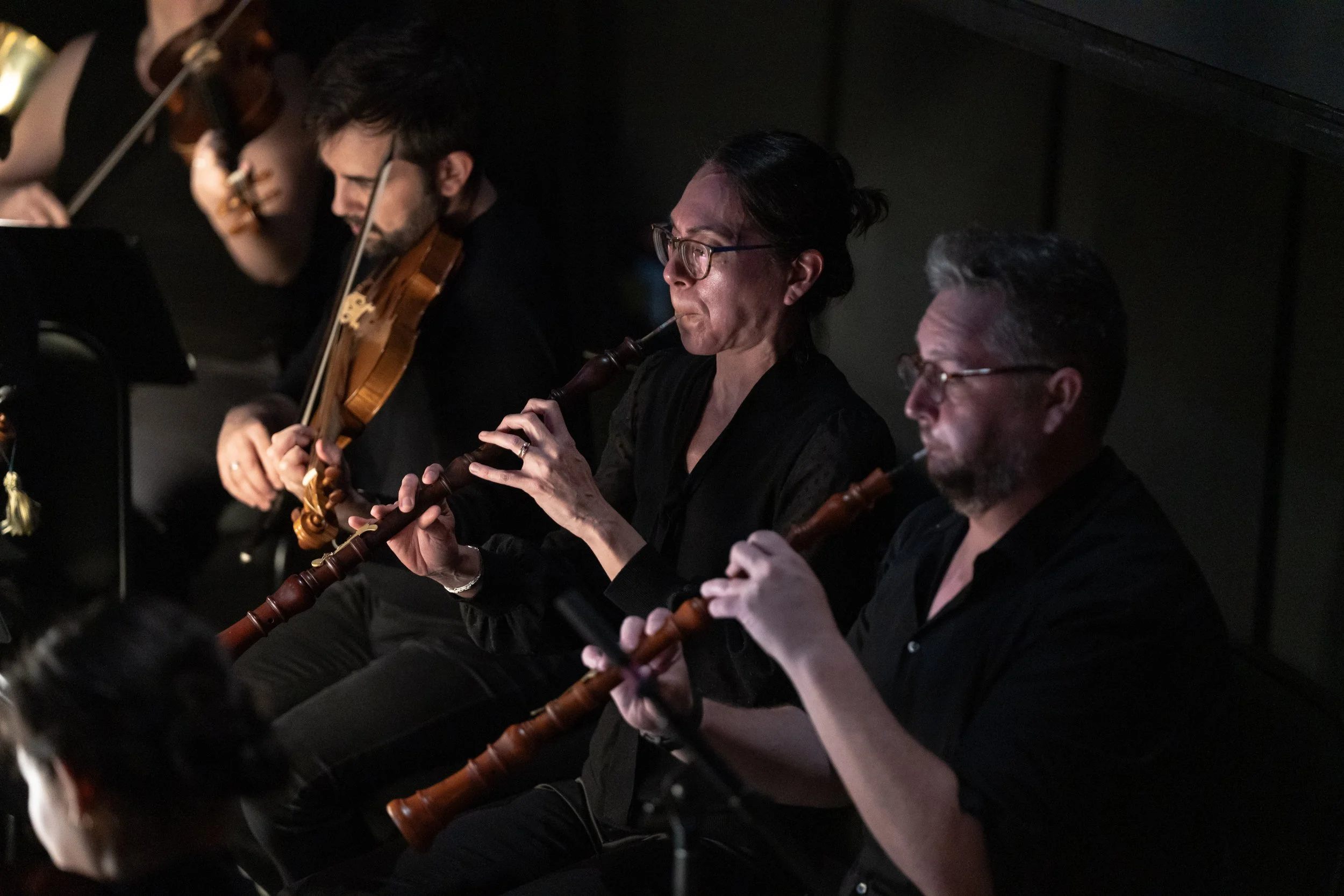
Artaserse, Haymarket Opera Company, 2025. Photo: Elliot Mandel
The orchestral ritornelli that frame most of the arias (some begin with unaccompanied voice) are among Vinci’s most original inventions in preparing the audience, and the character(s) being addressed, for the emotional progress of the drama. Some outstanding examples are Arbace’s aria “Fra cento affanni,” with its wide-ranging figurations and octave descents; and “Dimmi che un empio sei” (Mandane), with rapid violin scales chasing the frantic heroine in her uncertainty, turning to a slow B section and interrupting herself in the da capo. Another striking orchestral introduction comes as the opening of Act III, a strong dotted orchestral piece evoking French overture style, which finds Arbace in prison—a remarkable change of tone which sets the scene for a final act of nearly committed murders, pulled back from the edge in the nick of time.
None of the these highlights, however, can rival the opera’s pièce de resistance, Arbace’s bravura aria “Vo solcando un mar crudele,” which brings Act I to its climactic close, as the hero realizes that he will lose those dear to him from the false accusation of killing King Serse. Using the shipwreck metaphor for a life of turmoil—as Vivaldi would soon after in “Agitata da due venti” (La Griselda, 1735), Vinci created an aria destined to outlive the fame of the opera as a whole. Its spectacular scope for the male soprano of the original production, Giovanni Carestini, has made it a star piece in recent years for Carestini’s modern successors, in this case the countertenor Key’Mon Murrah, whose ringing soprano register and effortless two-octave-plus range is throughout one of the joys of the recording.
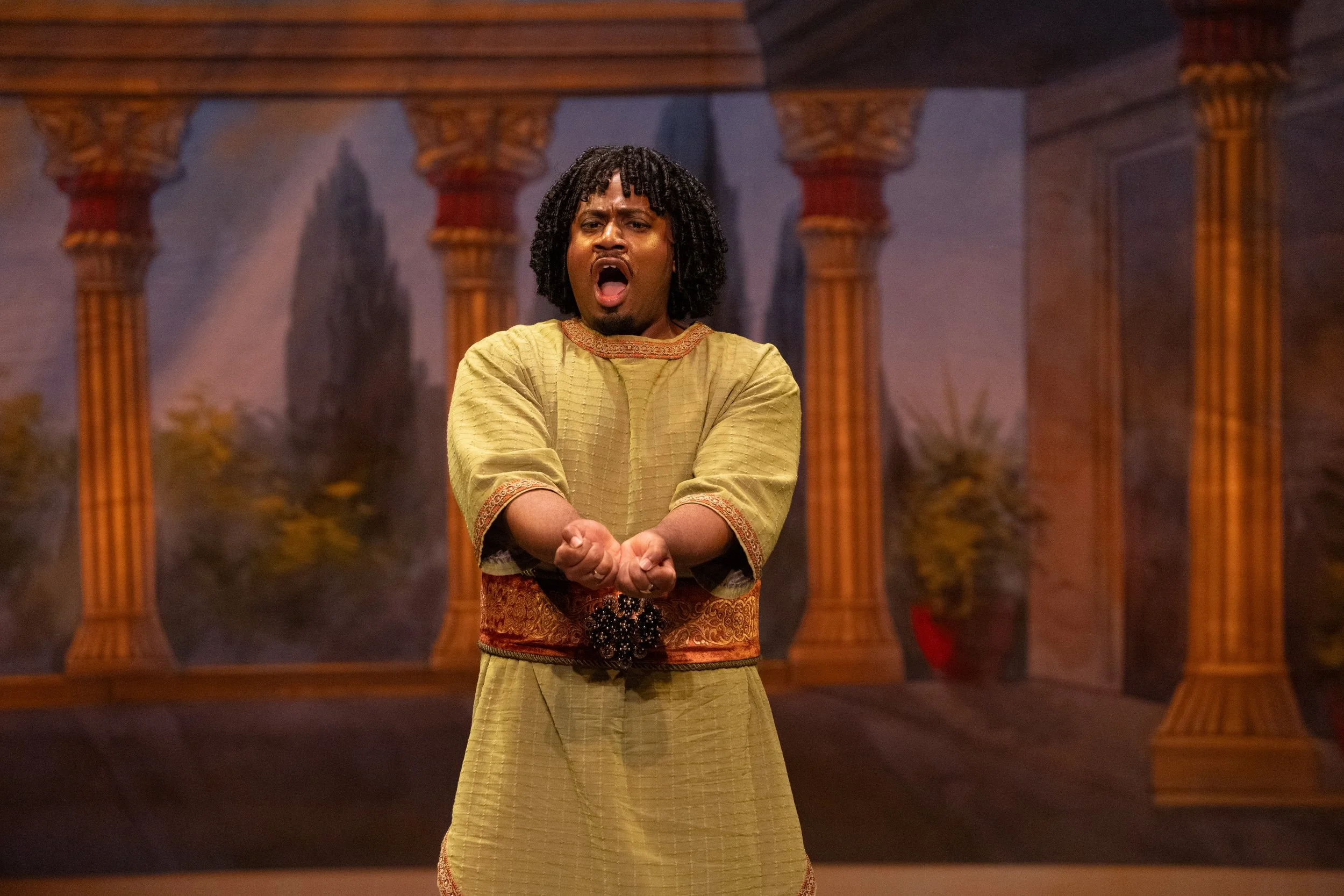
Artaserse, featuring Key’Mon Murrah, Haymarket Opera Company, 2025. Photo: Elliot Mandel
“Vo solcando” makes an unexpected appearance decades later in the domestic music making of the English chancellor Lord Thurlow, as documented in the Recollections of R. J. S. Stevens: [Thurlow’s daughter] “had been learning Vinci’s bravura song of ‘Vo solcando un mar crudele’,” which she sang “with considerable effort and pleased Lord Thurlow very much.” However, the message of the aria made an impact on one of her listeners, who voiced his fear that the young singer’s life would hit stormy seas, and end in shipwreck (elopement with a disapproved partner). This anecdote from 1792 of Stevens’s Recollections suggests the availability of Vinci’s aria in England through the eighteenth century, and its continued iconic status in some musical circles. If Miss Thurlow was able to meet the technical challenges of “Vo solcando,” presumably with piano accompaniment, it would be an astonishing feat for the Lord Chancellor’s daughter, embroiled in the tempestuous seas of her own life.
While many of the arias strike an imposing tone—either regal (Artaserse), courageous (Arbace), frenetic (Mandane in Act I), or wicked (Artabano and Megabiso), there are also gentle moods and tenderness, supporting Burney’s assessment of Vinci as a master (“reformer” Burney) of “lyric melody.” Semira’s aria in Act I, “Bramar di perdere troppo affanno,” is the first example in Artaserse of this lyric style, exquisitely sung with delicate ornaments by male soprano Elijah McCormack. Its sweetness is all the more telling as it follows the blustering aria “Sogna il guerrier,” in which Megabise (countertenor Ryan Belongie) stakes his amorous claim to the despairing Semira, trumpets and horns blazing.
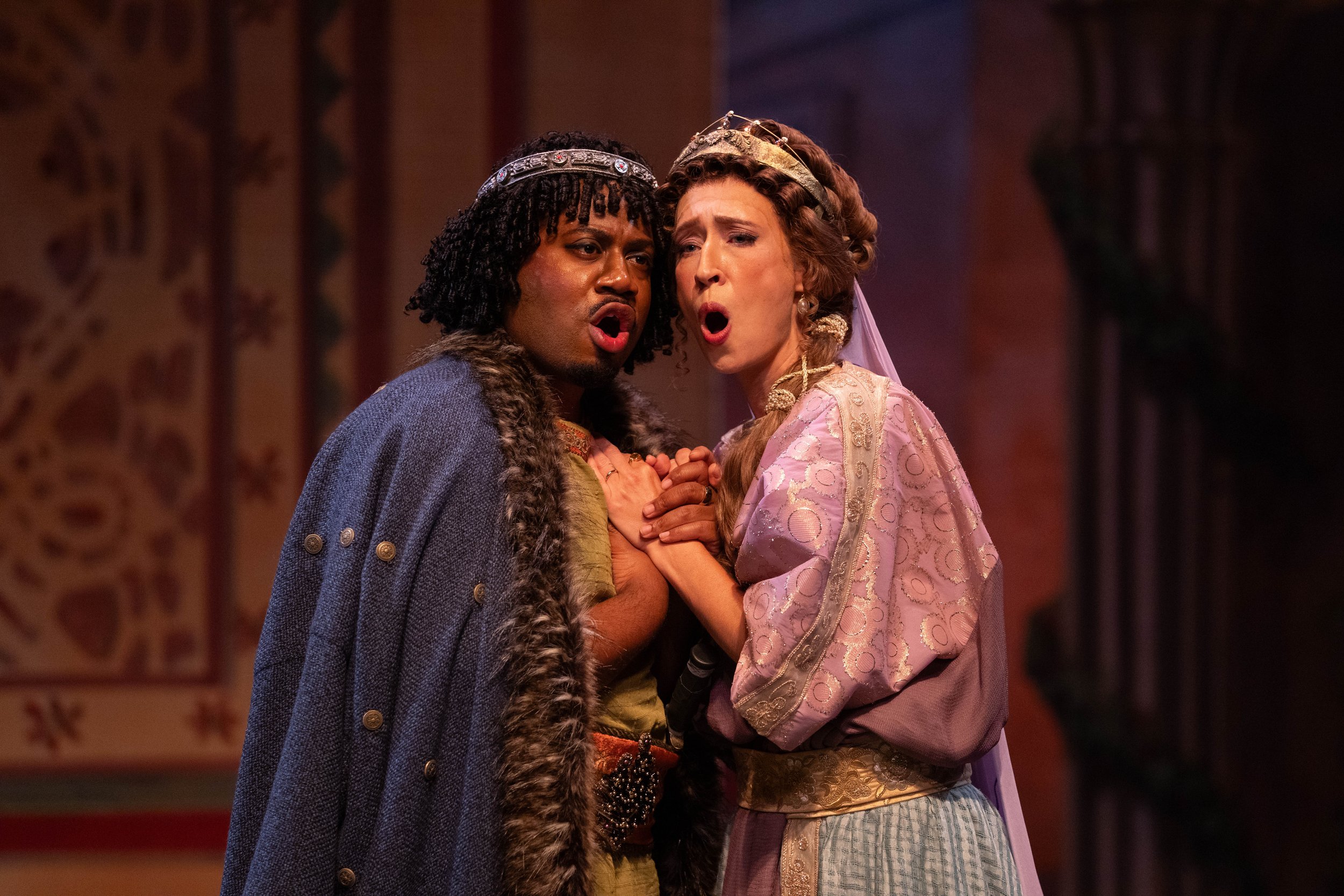
Artaserse, featuring Key’Mon Murrah and Emily Fons, Haymarket Opera Company, 2025. Photo: Elliot Mandel
But the female characters in Artaserse are far from submissive—a consequence perhaps of their portrayal onstage by male singers, opening a wider range of emotion than might have been thought proper for a female singer to voice on the Roman stage. The opera’s only duet brings together Arbace and Mandane as equals in intensity, displaying Vinci’s lyric style to the full. Placed nearly at the end of the dramma, the Act-III piece “Tu vuoi ch’io viva o cara” is a love duet in which the only resolution is mutual despair, with Mandane matching Arbace at every turn, until they eventually unite in harmoniously soaring lines. The quick responses and interruptions between the two—“Sentimi–Nò–Tu sei—Parti…” sound a new element of argument and dialogue after the many solo arias. Mozart’s world of Susanna and the Count seems just around the corner, though separated by fifty years. The duet is not quite the dénouement of the opera—which unfolds with many twists and turns through recitative both secco and accompagnato—but it is the last aria number of the opera: an unusually gentle climax to three acts of virtuoso arias voicing suspicions, accusations, and defiant declarations.
It is interesting to reflect on some differences between audience experience of the live production of an opera and its recorded version. The audience of the staged production has the advantage of live technicolor action as a guide to the plot in all its complexity, while the recitative action (almost inevitably of less interest to the “sound only” audience, though dramatically performed) explains and illustrates the characters as they conflict. The listener to the recording, on the other hand, can savor all the detail of the orchestral introductions, postludes, and vocal ornamentation—often partly obscured by applause, hall acoustics, and audience response. Lacking the visual and dramatic cues of the stage action, the listener has a harder job to decipher, at first hearing, the basic outline of who is plotting against whom; but the opportunity to repeat tracks at will plays an invaluable part in forming a detailed picture of Vinci the composer, and the virtuosity of the performers—free to concentrate on their vocal performance within their own chosen movement parameters.
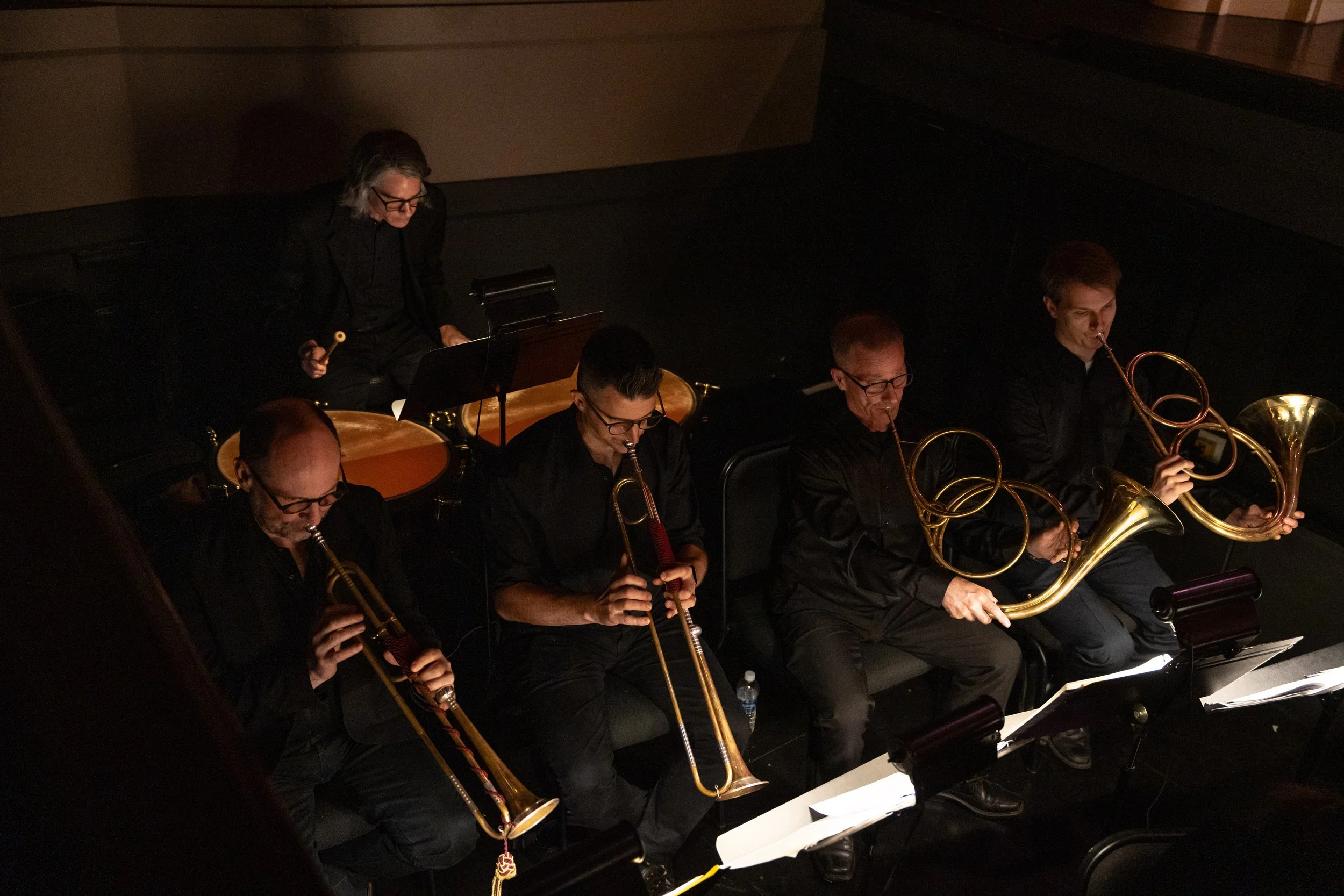
Artaserse, Haymarket Opera Company, 2025. Photo: Elliot Mandel
The Haymarket Opera Company recording provides all the necessary material—libretto and translation, and illuminating program notes by Louise K. Stein, which brings to life the historical and social context of Metastasio and Vinci’s opera. In addition to the many credits listed, one further area of information would be of interest: how the work was edited for modern performance and its basis in manuscript source(s).
Gradually, as we gain access to this relatively unknown chapter of operatic history through the inspired planning of groups such as Haymarket Opera Company, it is clear that the revival of such repertoire is always a major undertaking of casting, funding, and selling to the public. In Artaserse, the preparation of this studio recording following the live stage production has resulted in a recording notable for both spontaneity and precision, with many spectacular moments of vocal mastery and orchestral partnership. With skill and judgment, Artistic Director Craig Trompeter has realised this project in a wonderfully joyful spirit of team musicianship. There is much to explore in this repertoire of mid eighteenth-century opera, combining the resources of period-instrument performance with stylistically based and imaginative vocal virtuosity. Haymarket Opera Company is ideally placed to continue the exploration.
About the author
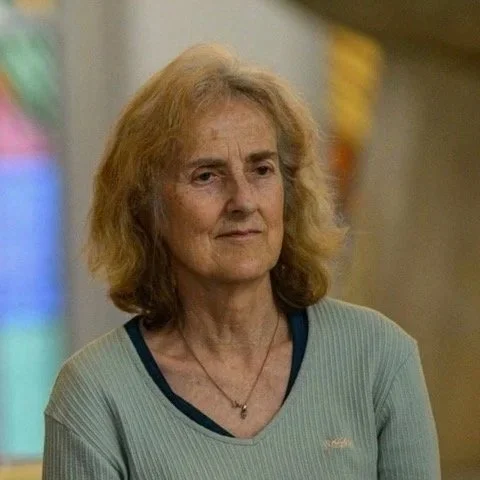
Born in Dunedin, New Zealand, Rosalind Halton studied music at the University of Otago, going on to complete a D.Phil. on the music of Haydn at Oxford, where playing harpsichord and researching Italian baroque vocal music became her dominant passions. At Oxford she began an ongoing study of the cantatas of Alessandro Scarlatti through editing and performing with soprano Kate Eckersley. Since 1986 she has lived and worked in Australia, supervising postgraduate work in performance research at the University of New England and the University of Newcastle, where she is an Honorary Associate Professor. Her research has led to conference presentations in Australia and Italy on Alessandro Scarlatti’s music, articles in Studi Musicali and Eighteenth Century Music, and many published editions, including two for A-R Editions. She has performed in the U.K., Europe, Canada, New Zealand, and Australia, where she won a Soundscapes Award for her two-CD release The French Harpsichord, ABC Classics. Her major recorded work is a three-CD set for ABC Classics of cantatas and serenatas by Alessandro Scarlatti, leading the project from the harpsichord.
About The Haymarket Review: This digital publication including thoughts about the work produced by Haymarket is designed to deepen our connection to audiences, nurture and feed audience curiosity about historical performance, offer critical opinions and thoughtful reflections on our performances, and provide a forum for Haymarket and its audience to connect through sharing insights, opinions, learning, and expertise.