
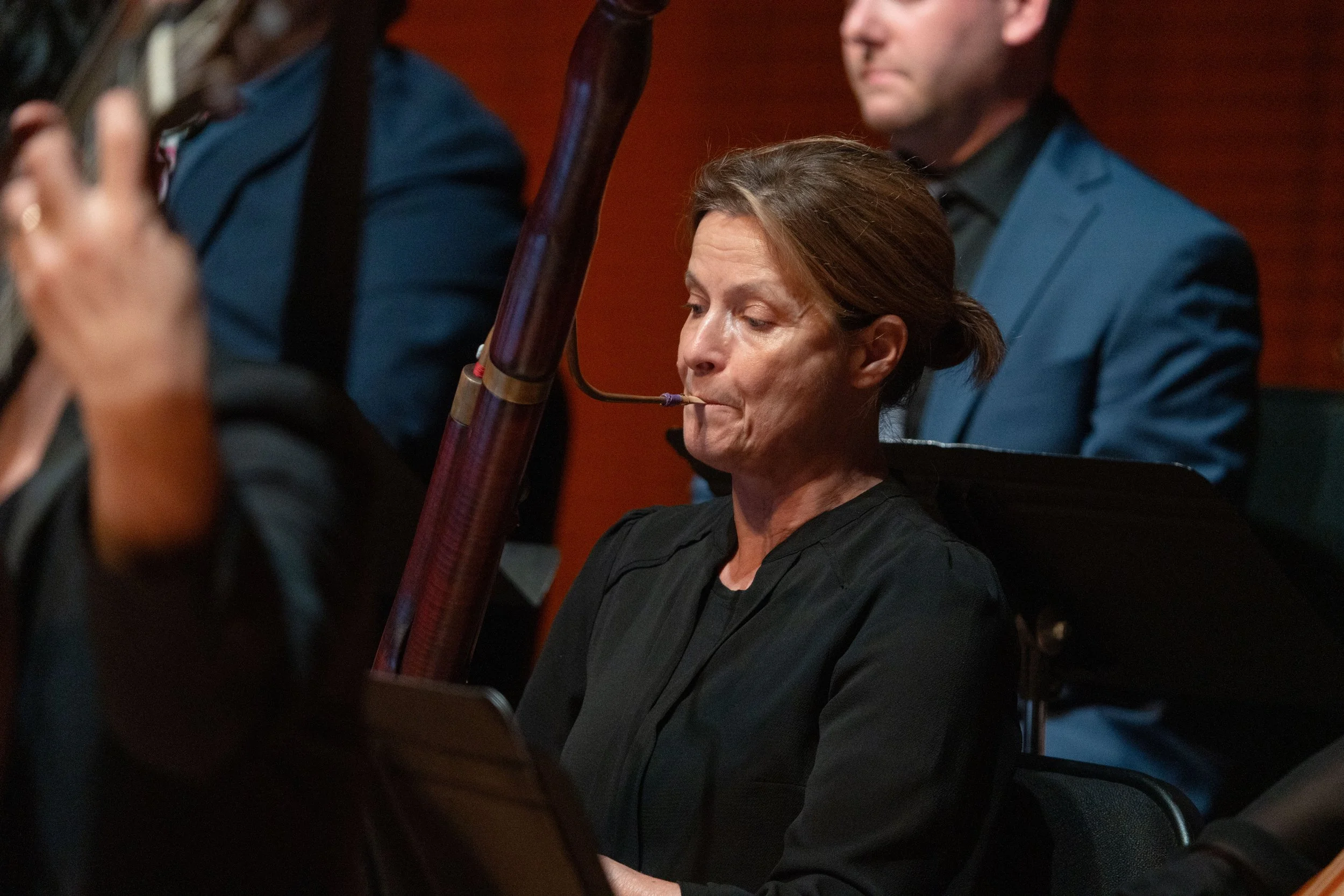
David et Jonathas, Haymarket Opera Company, 2026. Photo: Elliot Mandel
Bassoonist Sally Jackson reflects on
David et Jonathas
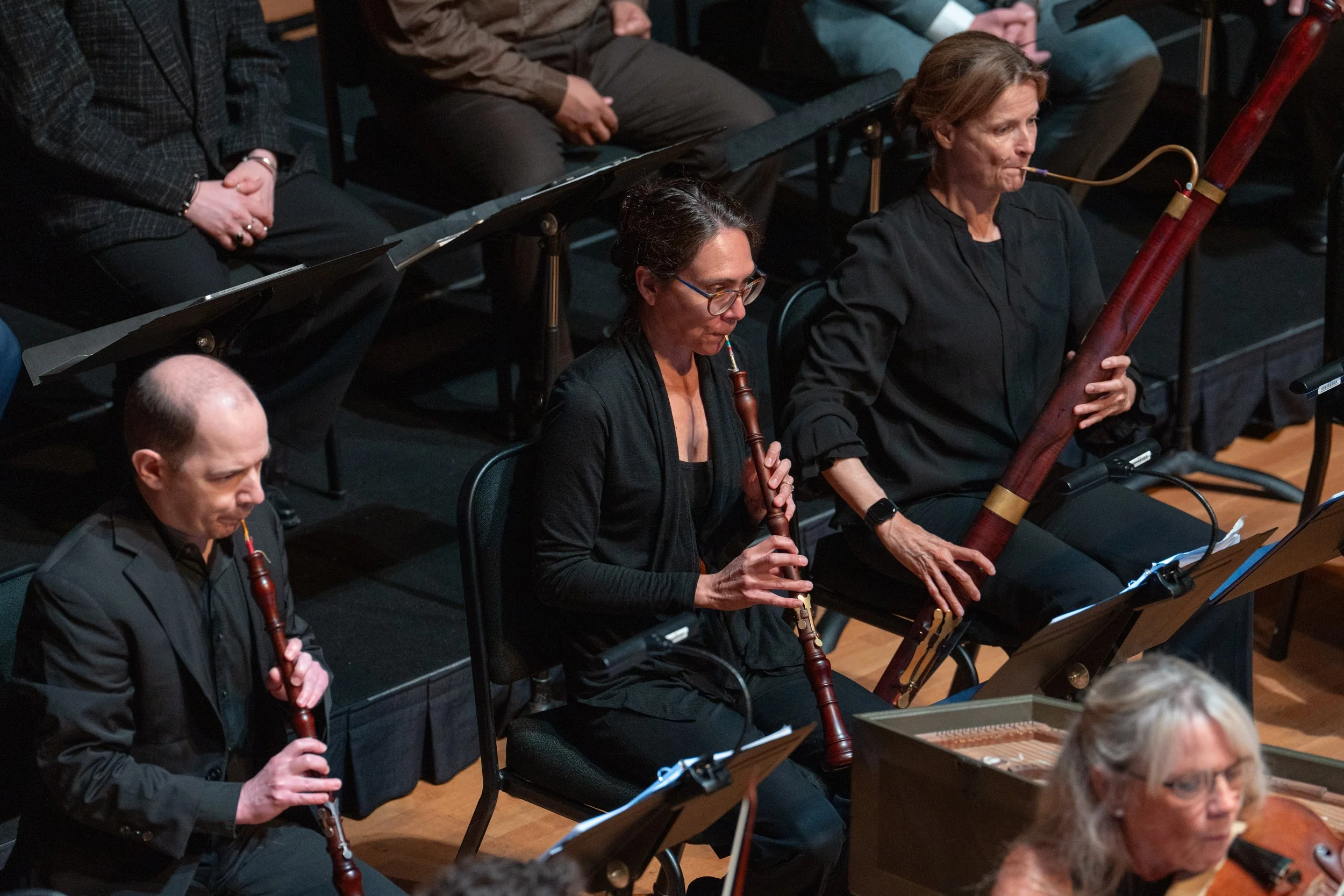
David et Jonathas, Haymarket Opera Company, 2026. Photo: Elliot Mandel
When Chase invited me to write a post-concert reflection for David et Jonathas a couple of months ago, I was happy to accept—but then thinking further I had a brief moment of doubt. Could I as an orchestral musician really write anything interesting about an opera production? I have played in many orchestra pits where my de facto position as a bassoon player is sitting right at the back in the dark, usually very detached from what is going on on the stage above. The volume in the pit can be very loud; at these moments no singing can be heard, the only connection to the stage being the gestures of the conductor. Even socially the orchestra is generally separate; the singers and production team will have already formed a bond, having met and worked together for several weeks before the orchestra arrives.
I mention all this because working with Haymarket Opera is very different. Being based at the Holtschneider Performance Center at DePaul, moving between fully staged productions in the Sasha and Eugene Jarvis Opera Hall (with its small, more visible pit) and semi-staged performances on the concert platform in Gannon Hall, I love the fact that we are in a better position to feel part of the whole drama.
Another reason to say yes to working with Haymarket is the incredible and brave choices they make in presenting rarely heard or known early Baroque operas. My most memorable performances in recent years have been with this group, it being very likely that each production will be the only time most of us will perform this particular piece.
The Historically Informed Performance (HIP) scene in the UK and Europe that I am most familiar with has been well established since the 1980s. Back then there was a real sense of discovery and excitement in playing Baroque music on instruments (or copies of instruments) that the composers would have known. This gradually moved forward in time to take in Classical, Romantic, and early 20th-century repertoire, all played on instruments of the period. There was so much work; each orchestra/ensemble had their own record company keen to build their own early instrument library. It was a fulltime job touring then recording a vast amount of great repertoire, sometimes more than once, to satisfy each record company.
This was all good for the bank balance, plus the sense of discovery in re-examining well-known and unknown repertoire on appropriate instruments was very rewarding. One of my most memorable later opera experiences was playing Das Rheingold with Orchestra of the Age of Enlightenment and Sir Simon Rattle. The narrower bores of the brass in particular allowed a more balanced orchestral sound and we were always able to hear the singers. I was sad however that in the push to move forward, we were leaving behind the earlier, less-explored Baroque and Renaissance works that had drawn me to specialise in old instruments in the first place.
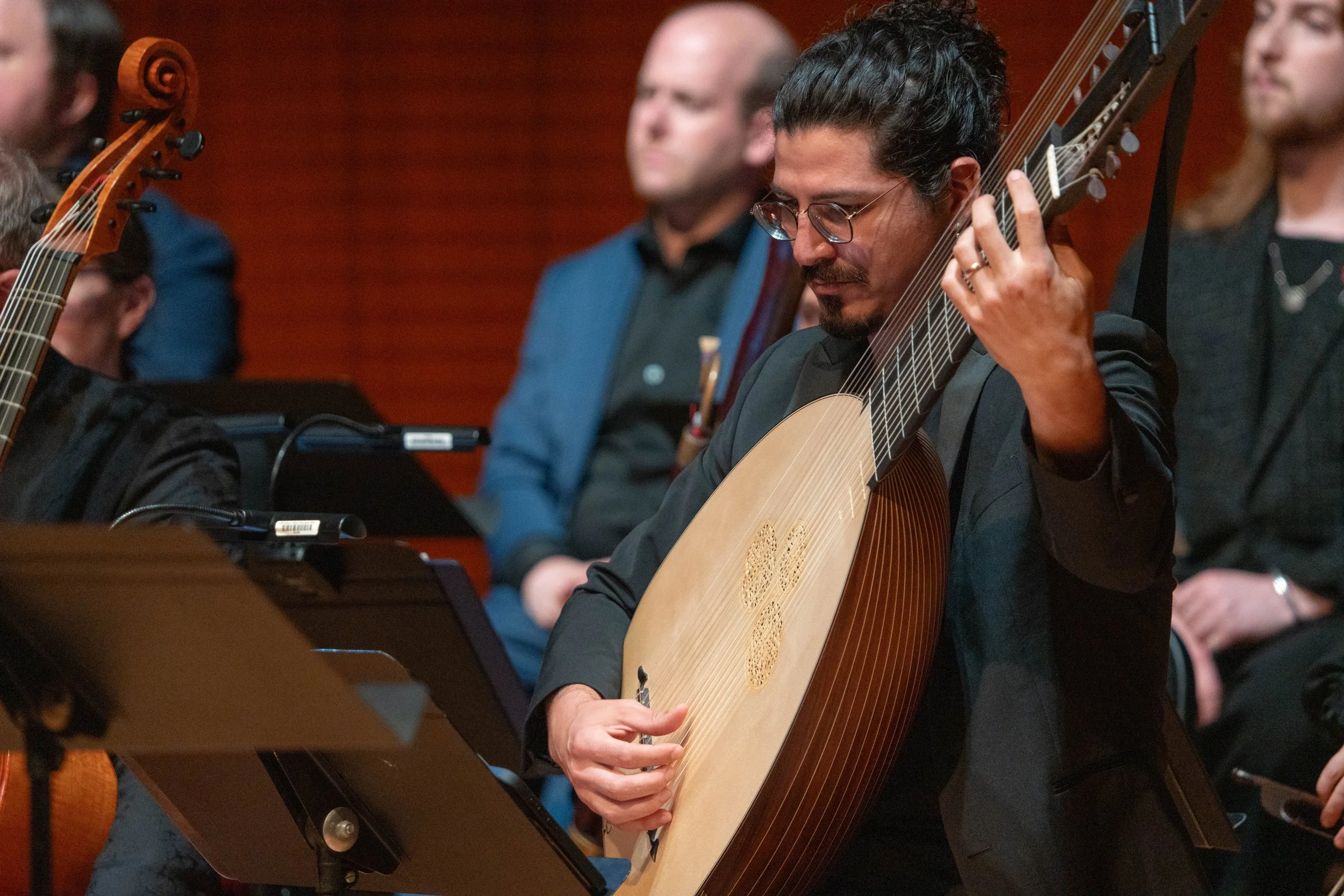
David et Jonathas, Haymarket Opera Company, 2026. Photo: Elliot Mandel
Back to the present day, one of my great regrets is that we don’t play nearly enough early French music, so to hear Craig proposing Charpentier's David et Jonathas was an immediate yes please!
I realised I knew very little about Charpentier, so noted that he studied in Rome with Carissimi, bringing an Italian influence back to France at a time when Lully's grip on French musical life was immense. David et Jonathas was first performed in Paris in 1688, one year after the death of Lully and when Rameau was just five years of age. I always find it very useful to set this all in context; comparing other French music I have played, this piece felt more the forerunner of Rameau’s style than the grandeur of Lully’s music.
For our performance I loved the decision to opt for the warmer, richer sound world created by playing at the lower pitch of A392 (a tone below A440 modern pitch). This was further enhanced by the addition of extra violas and I was lucky to be surrounded by a very special bass section comprising bass violin, viola da gamba, theorbo, and harpsichord.
For myself and the oboes/recorders, playing at A392 meant different instruments than the normal baroque instruments tuned at A415 (a semitone below modern pitch). Sadly I do not play enough music at A392 to justify buying an instrument so I had to borrow one for this production. This presented its own challenge, as I was reliant on the rehearsals not only to feel comfortable with the piece but also to figure out the instrument itself.
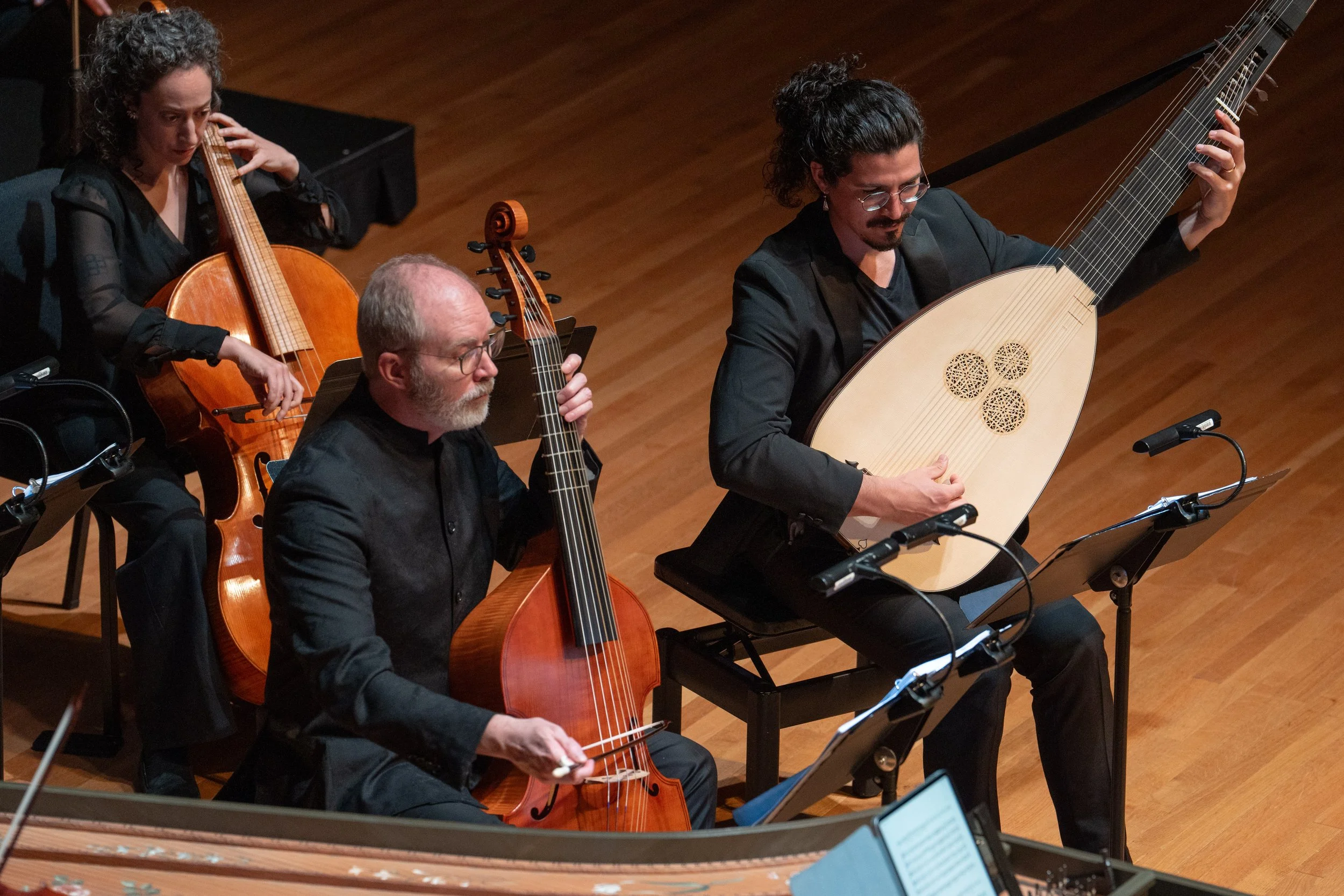
David et Jonathas, Haymarket Opera Company, 2026. Photo: Elliot Mandel
The bassoon I was playing is made by Olivier Cottet after Charles Bizey, Paris, 1685-1752. Being tuned to the lower pitch of A392, the instrument feels more solid and heavy than the A415 baroque instruments I own. But it is a mistake in this instance to think bigger means louder. This bassoon has a surprisingly sweet sound that can protest with a quiet squeak if pushed too hard but with gentle encouragement blends effortlessly with the gamba and bass violin sound. By the end of the performance I felt I had just about got to grips with its quirkiness. I loved the blend of sound and will be sad to return it to its owner!
Back again to the performance itself, I find it difficult to tune in to the singing when I’m playing and of course I always have to concentrate harder for a piece being played for the first time. I was locked into following Craig’s bowing arm in front of me and listening hard to blend with Anna’s fantastic bass violin sound to the left of me. The numbers that I sit out are the opportunities to appreciate the soloists. I remember loving the two soprano arias in the first half being accompanied by Kathryn and Stephen on recorder, a beautiful blend of instruments and voice. I was also very aware of the wonderful choir behind me in their dramatic unaccompanied moments in the finale of the piece.
One final thought for my post-concert reflection is to appreciate the inclusiveness that Chase Hopkins and Craig Trompeter bring to Haymarket Opera. On our music stands after every production/performance is a free drink voucher for the after-concert bar and a personal thank-you note. This is very unusual and hugely appreciated! I look forward to the next time.
About the author
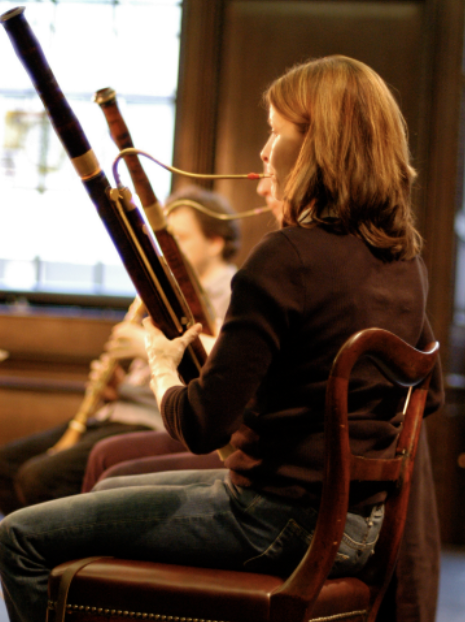
Sally Jackson studied the modern bassoon at the Royal Academy of Music in London. In her post-graduate year she attended a short seminar on the baroque bassoon, realised this was the way forward and never looked back. She subsequently built up a busy playing career specialising in historical bassoons, playing and touring all over the world with major period instrument orchestras. To date she can be heard on over 150 recordings, including many chamber and solo contributions.
About The Haymarket Review: This digital publication including thoughts about the work produced by Haymarket is designed to deepen our connection to audiences, nurture and feed audience curiosity about historical performance, offer critical opinions and thoughtful reflections on our performances, and provide a forum for Haymarket and its audience to connect through sharing insights, opinions, learning, and expertise.