

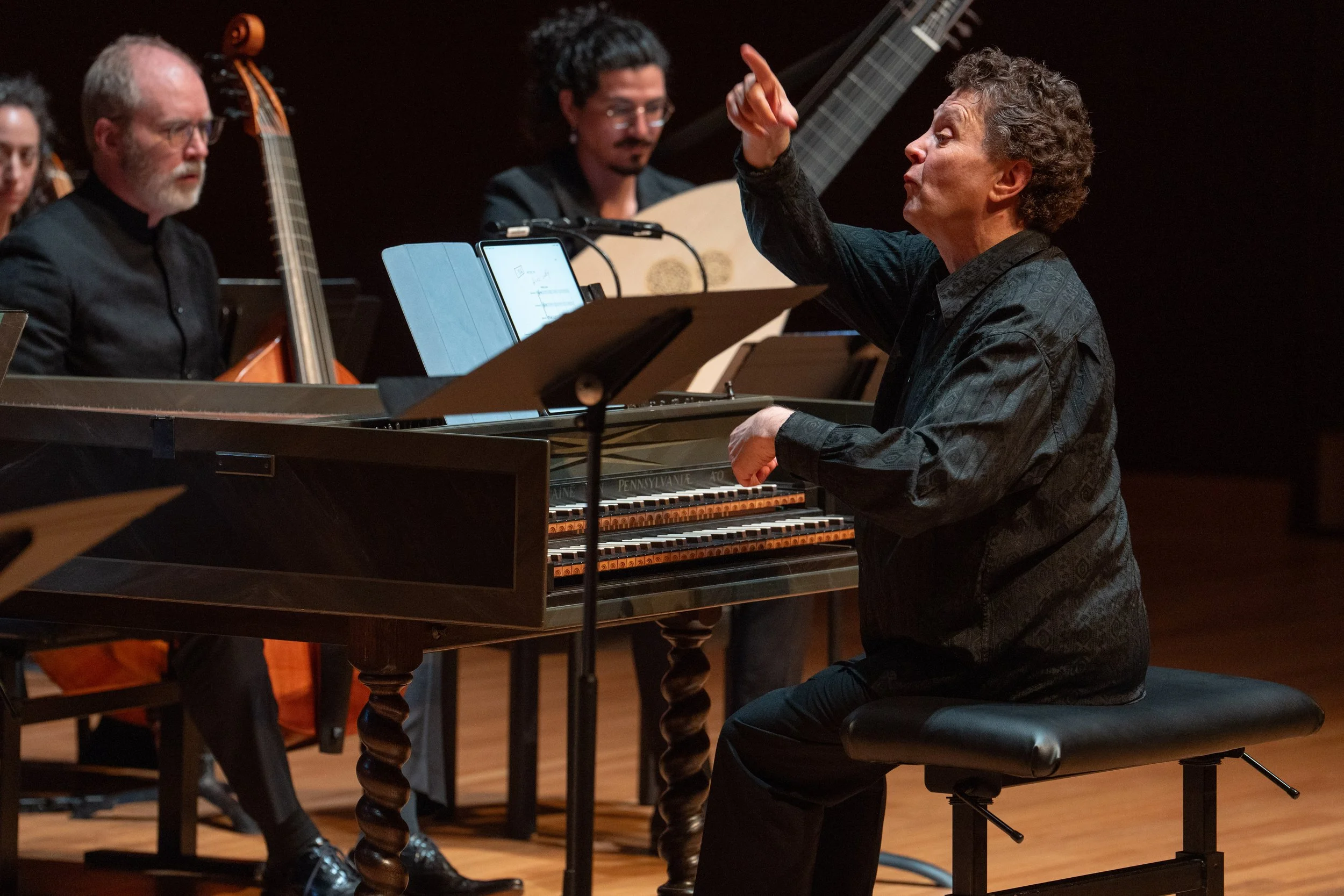
David et Jonathas, Haymarket Opera Company, 2026. Photo: Elliot Mandel
Building a Baroque Career:
In Conversation with Jory Vinikour
From Baroque to contemporary; from the most important opera halls, concert halls, and festivals in the world to intimate studio and house concerts; from riveting live performances to Grammy-nominated recordings; from star performer to conductor, coach, and mentor; from Chicago to France and back again. Internationally acclaimed harpsichordist and conductor Jory Vinikour, who romped home with first prizes in international competitions from an early age, has long been a Haymarket favorite performer, collaborator, and friend, now also an inaugural artistic advisor. HOC was thrilled to welcome Jory back in June 2026 to conduct the critically acclaimed Chicago premiere of Marc-Antoine Charpentier’s 1688 tragédie en musique, the masterpiece David et Jonathas.
Over several conversations, Jory shared insights, memories, and anecdotes that offer glimpses into his approach to conducting the Charpentier, how his career unfolded, what he’s learned along the way, and why Haymarket has a special place for him.
EXCITING MUSICAL HIGHLIGHTS: DAVID ET JONATHAS, CONDUCTING, AND HAYMARKET
Tell us how you prepared for the Charpentier, which all the players and singers seemed to agree is a challenging piece, and what you think looking back now.
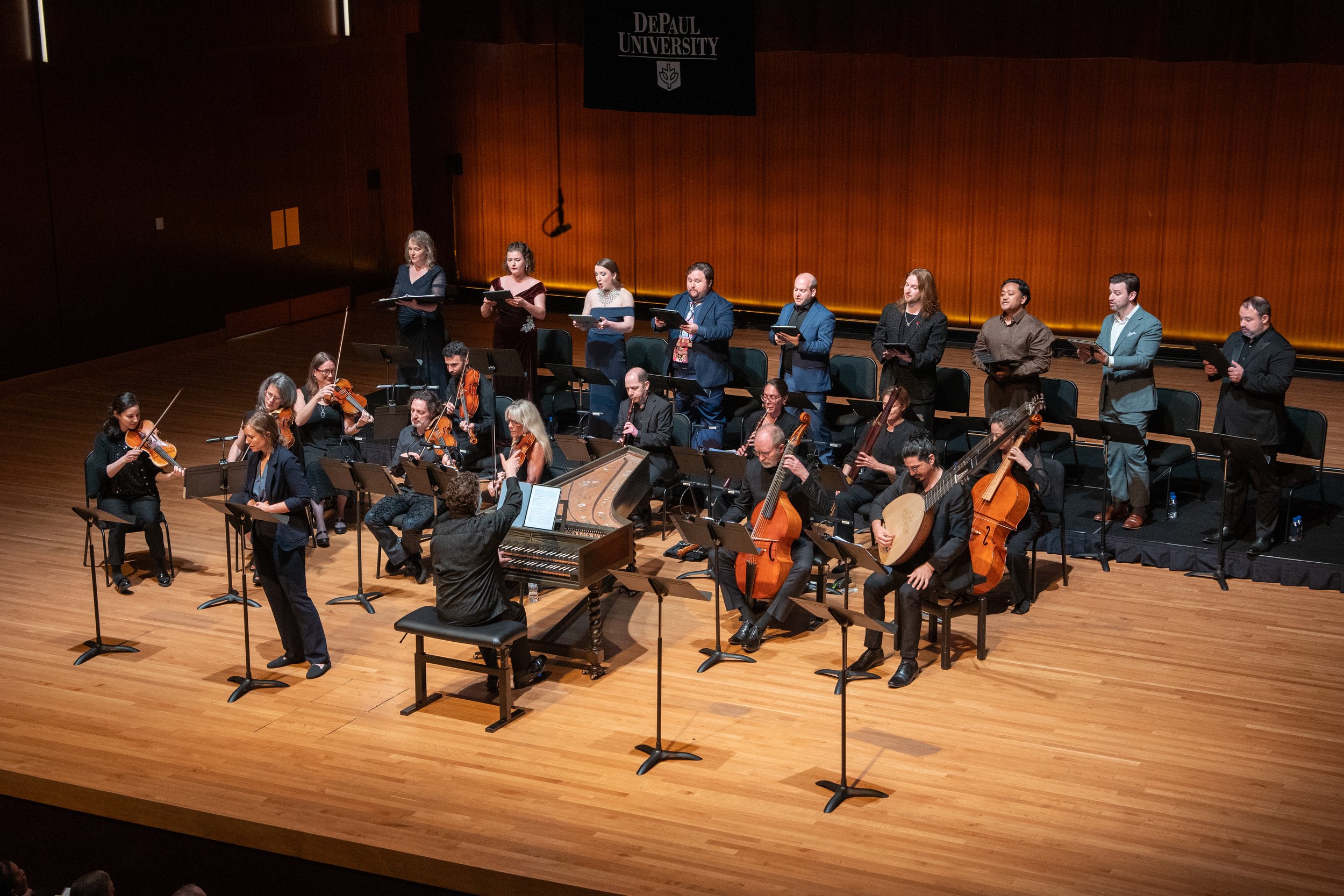
David et Jonathas, Haymarket Opera Company, 2026. Photo: Elliot Mandel
As Haymarket has moved forward, there have been more and more very exciting musical highlights. To come to Haymarket now as one of the first guest music directors has been thrilling, especially for repertoire which I adore. It was very special to be invited, a heck of a challenge for everybody, for the organization, for myself, a big thing to put together with relatively little time. It’s been a big highlight in my career!
Approaching this unique masterpiece, a very rare example of a true tragédie lyrique on a biblical theme, was daunting and exciting. I feel strongly that works of this genre by Lully, Charpentier, Campra, Rameau (to name just the most important composers) repose strongly on the language. With the exception of ensemble member Nathalie Colas, we had no native francophones in our ranks.
There were numerous ways of preparing—learning, relearning, studying the score. And I continually fell in love with it; it’s an absolutely beautiful piece of music. For Haymarket, I think we’re all speaking the same language basically, we’re all early musicians specialized in the performance of early music, and as everyone has encountered French Baroque, there’s nothing truly strange or foreign to them, they are familiar with the terms, with inégal, with these ornaments all over the place, and I can take a chamber music sort of approach to the conducting and have them follow my eyes when I’m playing.
I saw all principal singers for private video sessions prior to rehearsals. The first such meeting was with Kaitlin Foley, beloved for her performances in sacred works, notably those of J. S. Bach. I felt that she perfectly brought depth and truth to her portrayal of Jonathas, a role initially performed by a boy treble. Even without accompaniment of any sort, Kaitlin’s final lines—“Malgré la rigueur de mon sort, du moins je puis vous dire encor que je vous aime“ (Despite the harshness of my fate, at least I can still tell you that I love you)—was so affecting that I told her that I needed to leave my own music room to compose myself! I believe that our audience in June felt this very thing.
This score, like many similar works, is quite overwhelming. I was concerned that we were performing with the minimum number of singers and instrumentalists, and yet the result was satisfying and rich. Although I notated my score copiously and shared this with all performers, Craig [Trompeter]’s assistance was invaluable to the success of this project, and Jeri-Lou [Zike] proved to me during rehearsals why she really is a champion and a true leader.
I can only hope that I brought to this performance my years of experience living with this repertoire. There is such a difference between Charpentier and, say, the Italians of this epoch (Cavalli, Cesti) in many aspects, notably the seamless connection of musical episodes, requiring all performers to remain on their toes for long stretches!
How did you shift from performing to also conducting?
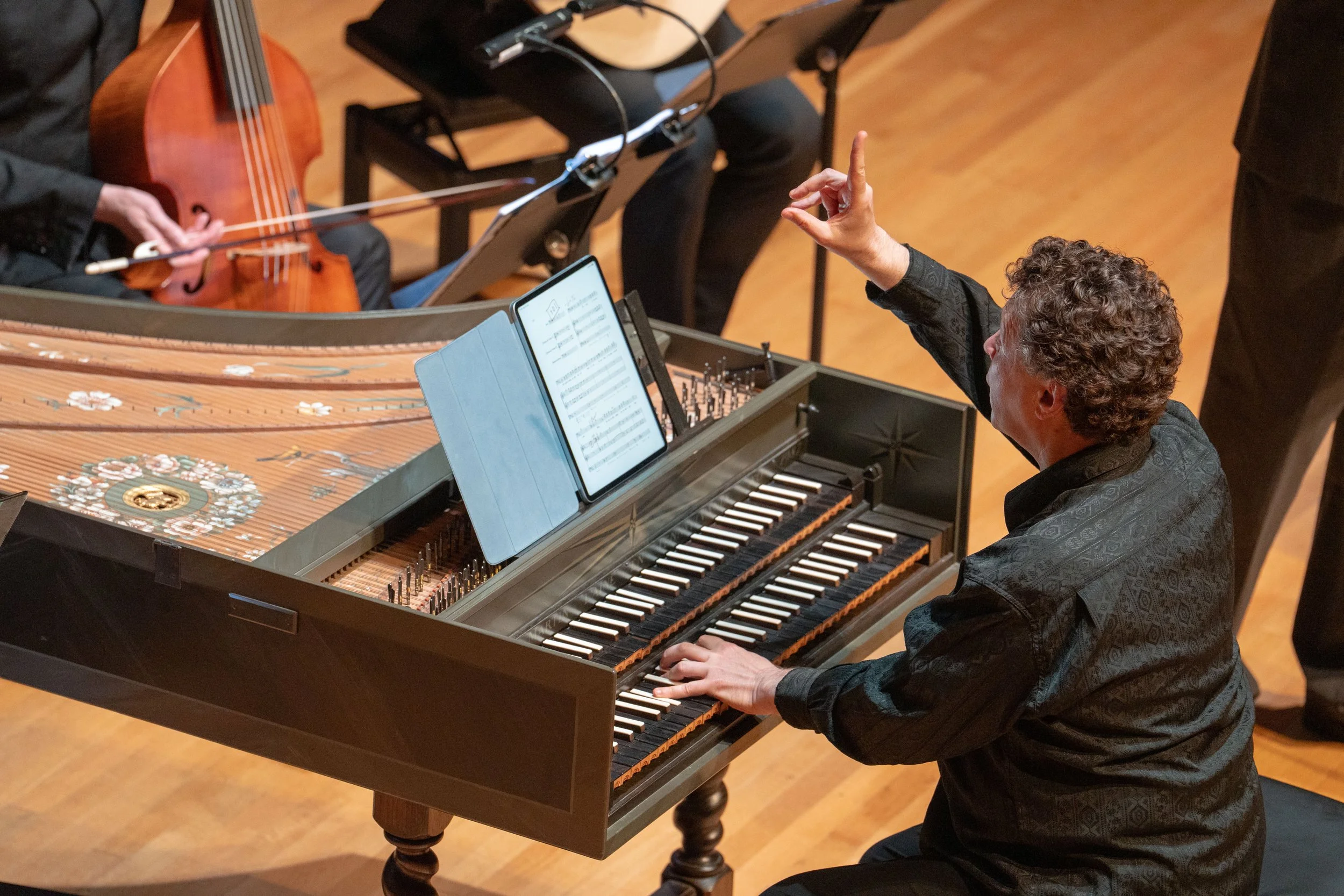
David et Jonathas, Haymarket Opera Company, 2026. Photo: Elliot Mandel
The first time I was invited to conduct any sort of substantial ensemble was in about 2007, a Handel and Rameau concert for the recently defunct Musica Angelica in Los Angeles. I got the invitation a couple of years ahead and thought that either I could just dive in, be at the harpsichord and do my best to communicate what I wanted or I could have some conducting lessons over the next two years, which I did. I had taken a handful of conducting lessons with a Russian teacher in New York, Vladimir Kin, and it wasn’t of the most staggering interest to me at the time, but when I came back to this some 25 years later, I sought out Denise Ham, a great teacher of conducting technique, also Russian school, a disciple of Ilya Musin. I saw Denise several times in all-day private conducting lessons. She would choose the repertoire—although she understood that my personal goals were elsewhere, she understood what I wanted to accomplish. I had a bit of Elgar, Mozart of course, some Beethoven, and we worked on gesture and only my very final day she said, ”OK, today I want something different—you’re going to sit down at the piano with some of the program you will be performing and I want you to show me how you might go about this.” I had to show where I might gesture with the hands, clearly no baton, to the orchestra. I got very valuable input from Denise, and I’m forever grateful to her for it.
Share some of your other Haymarket memories and what the company means to you.
Alcina (Handel) last summer at Ravinia, wasn’t that fabulous? Another terrific Haymarket memory is playing San Giovanni Battista by Stradella at the 2017 Valletta International Baroque Festival in Malta with the company and Craig also arranging for me to have a solo recital at the festival, a pretty wonderful thing. Back in the early days playing at the Mayne Stage [on Morse Ave. in Rogers Park], in the cabaret setting it could be so darned fun. I remember David Schrader, the well-known Chicago harpsichordist, bringing me a Bailey’s to my harpsichord at the intermission of Scarlatti’s Gli equivoci nel sembiante—those delightful moments with some musical highlights, and now more and more exciting musical highlights.
Haymarket has absolutely maintained this special ambiance and Chase [Hopkins], whom I originally met strictly as a singer, has been a benediction. Haymarket’s installation at DePaul has been a great thing—speaking as an artist, a lover of Haymarket, a performer, but also as an audience member, at DePaul you have the benefits of a beautiful, dedicated concert and opera space and it’s also a little like coming back to the wonderful intimate quality of Mayne Stage. You can have a drink and hang out at the intermission or before and after a performance, something you’re certainly not going to get at most venues. So yes, I do think that not only has Haymarket maintained that special quality, they’ve actually heightened it.
FROM PIANO TO HARPSICHORD: CHALKING ONE UP FOR THE PERIOD-INSTRUMENT MOVEMENT
Anthony Tommasini wrote in The New York Times about your performance in Rinaldo at Lyric Opera of Chicago in 2012, "Onstage a dancer pretends to play the gargantuan harpsichord. The real battle is between Ms. van den Heever, who sends chilling phrases flying, and Mr. Vinikour, in the pit. He wins. A diva put in her place by a harpsichordist! Chalk one up for the period-instrument movement." How did you first discover the harpsichord and come to know it was your instrument? Tell us about how you came to chalking many up for the harpsichord and its period.
Where did I first hear the harpsichord? I think on the PBS series Elizabeth Regina with Glenda Jackson, where we would have heard Christopher Hogwood playing pieces from the Elizabethan Virginal school with the great British recorder player David Munroe’s pioneering early music ensemble. I was pretty much still a kid, 11-12 years old, besotted with that music and extremely curious to hear the harpsichord. I would take records out of the library—I heard Wanda Landowska, whom I adored and still adore, playing on her great big Pleyel harpsichord (I own one of these by the way), and although this has its place in the revival of the instrument, it has nothing really to do in any way with a historic harpsichord as might have existed somewhere between say Elizabethan England and the end of the French Revolution. I would go to baroque music concerts at Orchestra Hall that frequently would feature a nasty little harpsichord somewhere and I would be very disappointed because it didn’t speak to me.
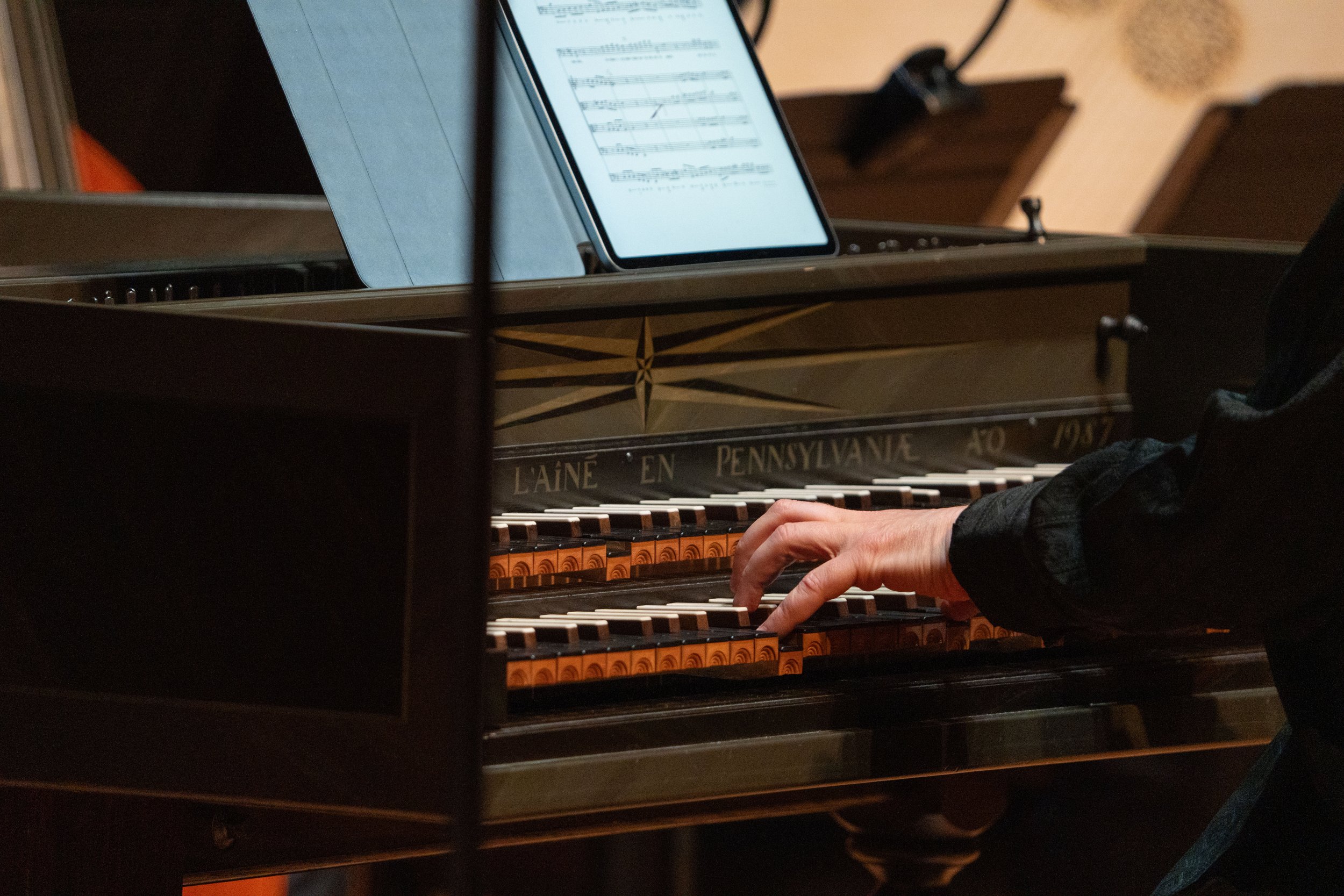
David et Jonathas, Haymarket Opera Company, 2026. Photo: Elliot Mandel
Extremely eager—overeager!—to discover the harpsichord, I sought out the harpsichord teacher, Shirley Mathews, on my first day at Peabody Conservatory in Baltimore. I knocked at her door, she had me sit down and play, and she happily accepted me as a harpsichord minor. I remained a piano major but even at that time, I enjoyed playing the harpsichord much more. I loved my amusingly eccentric harpsichord teacher—may she rest in peace—but I also had some great piano teaching throughout, such as Ann Schein, the last student of Arthur Rubinstein. A legend. Influential, wonderful, and inspiring but I don’t think she was particularly open-minded about early music and I knew nothing at the time. I had another great teacher, Nina Svetlanova, who was (among her numerous husbands!) the wife of the Russian conductor Yevgeny Svetlanov. She was open to all sorts of music and loved harpsichord although she was very much the old-school piano professor. In my final year of Bachelor studies at the Mannes College of Music in New York, Mannes’s remarkable president Dr. Charles Kaufmann offered me the first full scholarship under the aegis of the Sylvia Marlowe Foundation (Marlowe was a famous harpsichordist of the previous generation), which meant I had to major in harpsichord. In a sense, it answered a lot of questions—What would I do with this passion, how could a person make a living from playing harpsichord? etc. Having a full scholarship at a costly New York music conservatory was certainly a response to that question.
At first I felt very isolated—there was no early music department to speak of. I was very much into playing a virtuoso repertoire in my recitals which I think did excite people and change a few minds. I then went to Rutgers University, studying harpsichord with Charlotte Mattax, a university that also had very little in the way of early music, so there, too, I was kind of introducing people to it. Because I had an important keyboard fellowship, I found myself yet again playing piano a lot—Brahms sonatas and so on, and I was one of the main recital accompanists, mostly for instrumentalists, a little bit for singers. So a little against my wishes, I found myself being pushed back to the piano during my two years there, but still I think inciting some interest in my community about what the harpsichord could do.
Does your interest in different periods of music come from being pushed back to piano?
I’ve met some musicians whose interests are a bit like mine—early music, modern music, and then kind of a hole in the middle, and for me that big hole in the middle, the Romantic epoch, is not a hole in terms of the music I love but in terms of performance. Right from the beginning of my school experience I was playing works composed by students and professors for the harpsichord. By the time I was accepted into the Paris conservatory in the middle of my first year in Paris, I was still playing a great deal of new compositions.
Describe the difference between the touch of the piano and the harpsichord.
There are of course differing approaches to basic technique on the modern piano. I had quite a bit of Russian school and there’s also the English method—the Tobias Matthay school—and the French school “jeu perlé” not that different from the English. The modern piano has a double escapement so if you approach the keyboard of any piano very slowly and depress a key under your finger, what happens? The hammer will escape from its bearing and won’t contact the string (there is a point that the hammer strikes and leaves the string to vibrate freely). This piano technique involves, by definition, the act of “throwing“ the hammer towards the string. The harpsichord is of course a plucked instrument, and the mechanism which guides a quill towards the string is rather much simpler—not without its own sophistication and complexities, but basically speaking if I whack a harpsichord key hard I’m going to still get the same amount of sound as I would if I depressed the key very slowly. I’m simplifying this because we’re not showing our readers the inside of an instrument, but there’s a point where one can feel under the finger the actual approach of the quill to the string. So let’s say you’ve got a two-keyboard harpsichord and have the keyboards uncoupled, you’re just playing on the lower keyboard, one 8-foot stop, you depress any one of those keys very softly, slowly, you feel that there’s a moment that there’s a bit of resistance—the quill contacting the string!—under the finger and if you continue the descent of that key, the quill will indeed pluck the string. And you can go as far as you wish, it will pluck, and whether you go quickly or slowly there’s not a great deal of difference on 99% of instruments. With some very old harpsichords you can kind of fiddle with that a bit—bird-quilled instruments are more flexible so you do have a bit of give. So that is an essential: that the harpsichord requires the player to do what I call “playing on the string,“ the fingers never far from the keys. Top-notch players never throw the hands, the fingers remain very near the keys. On the harpsichord, like the piano, the balance over the keyboard is very important or one can develop tension, but we need so little weight from our arms, elbows, etc. beyond being well balanced over the keyboard, we need no other force frankly—everything comes from the finger articulation.
What about historically informed performance practices?
I don’t have a lot of pretense about this. I’m not a scholar or musicologist as such, but a lot of my information comes from knowing so much repertoire, comparative interpretation,and deep reflection. I’m mostly only interested in sources from what I’d call the greats, so Rameau for example has some explanation of his harpsichord technique. François Couperin has a much more succinct one, “L’Art de Toucher le Clavecin.” If we’re talking about early Italian, there’s Frescobaldi Preface, although that can already be interpreted in so many divergent ways. A lot for me comes from cross-knowledge and knowing the repertoire as both a player and a listener, even when it’s not referenced in a solo harpsichord piece, such as dance time or the use of inégal where that series of written eighth notes may be swung slightly or slightly free. When we’re speaking about this in terms of French baroque music it tends to be rather linked to how the language itself is interpreted and not just a thing that’s pasted onto the music. For Italian music—which I don’t play enough of but which I adore— it’s helpful knowing the great early Italian baroque Frescobaldi, just after Monteverdi, and work of Barbara Strozzi and Monteverdi. Domenico Scarlatti was much later, late baroque, and of course pianists have many possibilities of interpreting his music. If we’re speaking about the much earlier period, a few generations before him, we do scratch our heads a bit on what to do with a lot of the writing.
Tell us about the Rinaldo production that prompted such praise and surprise.
Rinaldo was a frankly unexpected moment for me—being a diva in the pit with a great diva onstage, such a greatly fun experience. We don’t really know what Handel did with that big harpsichord solo; there’s no actual record of what he played—the thing I played is part of a transcription by a younger composer and harpsichord player, William Babell, who wrote a few books of suites, most of which are his virtuoso transcriptions of Handel arias. The wonderful conductor Harry Bicket allowed me to do whatever I wished, reducing this twelve-minute long piece into something usable at the opera house—I just couldn’t change it night to night, as it was choreographed onstage. I went into it with great gusto and relish but the audience response was way way way beyond what any of us would have expected. It’s a very unusual moment in my career and honestly a rather unusual occurrence for any harpsichordist.
WOWING AUDIENCES WITH “SPECTACULAR DISPLAYS OF VIRTUOSITY AND SUBTLE DRAMATIC EXPRESSION,” “EXCITING THE EAR WITH BRILLIANCE AND EXPRESSIVE DEPTH,” “INFUSING THE WORK WITH PERSONALITY AND CONFIDENCE”
Critics have repeatedly used words and phrases such as “dazzling;” “sensual;” “immaculate virtuosity;” “artistic intensity;” “an authentic poet of the harpsichord;” “vibrant, flexible, clear [artistry], keenly attuned to the musical demands;” “employ[ing] the instrument’s powerful range of expressive techniques” about your playing. How do you work on both technique and interpretation/emotional aspects in order to bring them together so seamlessly as to earn all these plaudits and “make a concert an experience, in the very best sense of the word”?
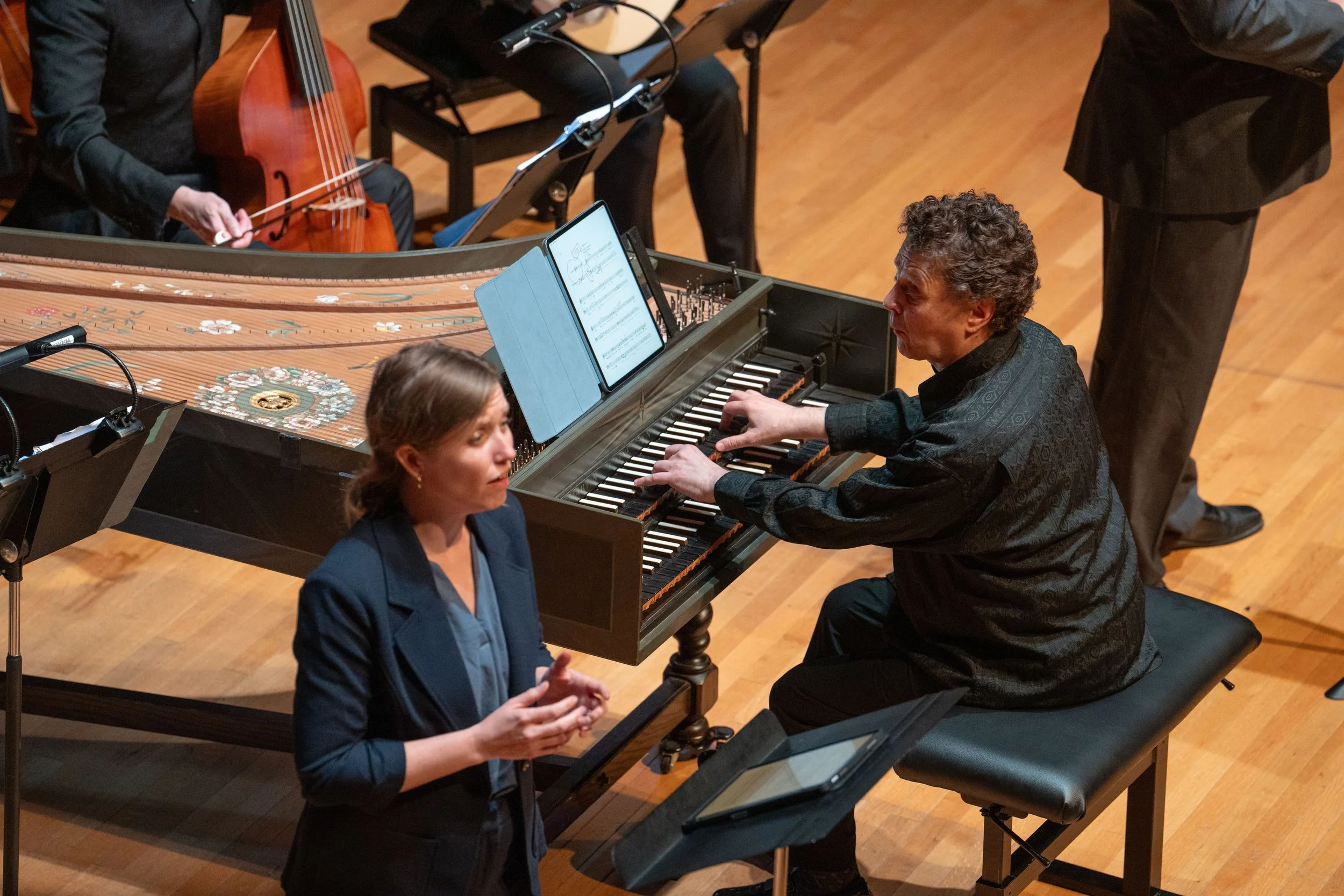
David et Jonathas, Haymarket Opera Company, 2026. Photo: Elliot Mandel
Some of my earlier training as a pianist does come into play here; I had such good pedagogical formation, and at the harpsichord, I’m relying on that very solid technical base. It’s such a difficult process to explain but I think first of all, learning the piece correctly, deciding basic character and then what liberties to take. Coming to the harpsichord with the piano as my first instrument, I always think about and am so interested in the touch of the instrument, “l’art de toucher,” how to approach the keyboard. Even at my age I’m still attempting to deepen that approach, sometimes with success and sometimes I think hmmmm, I need to go farther. It’s a slow process. Even learning contemporary repertoire and thinking about what I just did for Cedille Records (Mischa Zupko’s Harpsichord Concerto), learning it slowly slowly slowly, thinking very carefully about movement and tension to the hands. In the baroque repertoire, I rarely have to be that hyper-analytical about how I’m approaching it and just gradually find—we hope, one hopes, I hope—more and more things to bring to that interpretation. And some of those are really intimate as opposed to just being a manifestation of virtuoso music. Even playing Scarlatti or Rameau or whatever I don’t worry that much about all the details.
What have others said about your playing that has changed something for you?
Something that I’m still struggling with is my péché mignon (guilty pleasure) of playing fast, and just because I can doesn’t mean that I should. So I still try to take that on board. At times in any and all repertoire, looking for what is more poetic and more lyrical, what’s more attuned to the human voice and to vocal music which I know and love, so that would be something that I’ve taken on board, some of it recently, some of it very long ago and it’s contributed to increasingly positive assessments. I’m of a certain age and I don’t think there’s a time that one wishes to stop progressing, thinking in terms of interpretation, how to always seek flexibility and precision at the same time.
PROMOTING THE HARPSICHORD AS “A VIABLE, VITAL, AND EXPRESSIVE VOICE IN CONTEMPORARY MUSIC”
You are well known for baroque performance/recording and also as a “noted champion” of Francis Poulenc’s Concert Champêtre. Many are less aware of your work championing contemporary and recent harpsichord composers, including Harold Meltzer, Frédéric Durieux, Michael Nyman, Cyril Scott, Stephen Blumberg, Patricia Morehead, and Graham Lynch among others, and you’ve been noted for your role in maintaining the “vital” role of the harpsichord through both performance and recording. Tell us about that and how you choose which composers to champion.
Frédéric Durieux wrote a very difficult work for harpsichord and percussion, Marges, inspired by the famous Greek composer Xenakis. It was written for the Prix du Clavecin of the Conservatoire de Paris for a diploma recital 36 years ago, when there was generally an obligatory contemporary piece commissioned by the conservatory, whatever your instrument. Kenneth Gilbert, the professor at that time, decided that the piece was simply too difficult for the class so I met the composer and ended up playing it for the Modern Music Festival at Radio France. A favorite piece written for me was Harold Meltzer’s Toccatas—it was sheer happenstance. I was approached by someone who had financed some modern music and he sent me a recording of a chamber work by Meltzer, Virginal, a beautiful work, harpsichord and small chamber ensemble, a piece I loved and still love. This investor asked me if I’d be interested in having a work commissioned for me by Meltzer, and I performed the original version —four movements—at a number of programs including at Carnegie Hall and a formal recording. The sponsor then decided that this beautiful work was missing one final virtuoso movement—a toccata in the most familiar sense, and the composer himself also felt that way, so the four toccatas, a little bit inspired by Froberger, became five. I got to perform the work several more times in this “complete“ version. Harold Meltzer himself had studied harpsichord quite seriously at Yale and knew his way very well around the instrument, and I think there is something special in that music, not only the harmonic and melodic content and beautiful textures but how the harpsichord itself is used. Harold recently passed away, far, far too young. I played a beautiful short work, “Admiring Yoro Waterfall,” by Graham Lynch many times, including on WFMT. These days, I think there are fewer opportunities for me just to choose and add contemporary pieces to the mix, although my recording of Mischa Zupko’s concerto certainly belies this, and I am in communication with a talented young British composer for a future project. That said, I will be onstage at the 2027 Santa Fe Opera Festival, playing the harpsichord solo in Brett Dean’s Of One Blood, the American premiere of the work. My last Carnegie event was on their Early Music series and I wanted to play the harpsichord sonata by the American composer Samuel Adler but I wasn’t able to include any such relatively contemporary music. On my 2012 American composers recording with Sono Luminus, I could choose what I wanted and there are two works written for me on that recording, the five toccatas by Meltzer and a short piece—a handful and a dickens to learn—written for me by composer Patricia Morehead!
“SUPERB,” “COMPELLING,” “OUTSTANDING” RECORDINGS
Your latest recording just came out in June 2026 with Cedille Records (also a valued Haymarket recording partner)—Mischa Zupko’s Harpsichord Concerto. You’re one of the few harpsichordists to have Grammy-nominated recordings—another unique accomplishment. Talk about your recording career and the difference between preparing and performing for live concerts and recordings.
I recorded Mischa Zupko’s Harpsichord Concerto (written a good 20 years ago) with a quartet of outstanding players in 2025 for Cedille in one intense session and it’s a thriller! Thanks are due not only to Cedille and Jim Ginsburg, but to superstar violinist Desirée Ruhstrat for putting this together. I’ve had very good luck in the last 15 or so years with recording and labels, from Rameau to contemporary American music. I got to work with an excellent team at Sono Luminus, and then connecting with Jim Ginsburg and Cedille Records in Chicago was an astonishingly great bit of luck. Cedille and Jim are wonderful, and Bill Maylone, his main recording engineer, is one of the best anywhere. I have also recorded 31 Scarlatti sonatas for the fine French label Aparté, and hope that this recording will appear in the next season. Preparing for a recording requires great technical preparation. Even though you can correct yourself, it’s so so so important to be well-prepared. Recording can be extremely strenuous mentally, and repetition can be astoundingly mind-numbing in an almost aggressive way, much more stressful than live performance for me. But working with Jim, he makes me feel very confident—he’s a careful listener but easy-going. And the very gifted young recording producer with whom I worked at Aparté had a good bedside manner when I was recording the Scarlatti!
What do you dream about recording that you haven’t had the chance to do?
Recordings are coming to a different time with streaming and physical CDs diminishing. I’d probably love to record more Bach—the Well-Tempered Klavier, the English Suites, the French suites. But I don’t feel so compelled that if I don’t do this, I’ll die unhappy!
UNABASHEDLY “FOLLOWING MY OWN INNER HARPSICHORDIST”
Tell us about some other highlights looking back over your career.
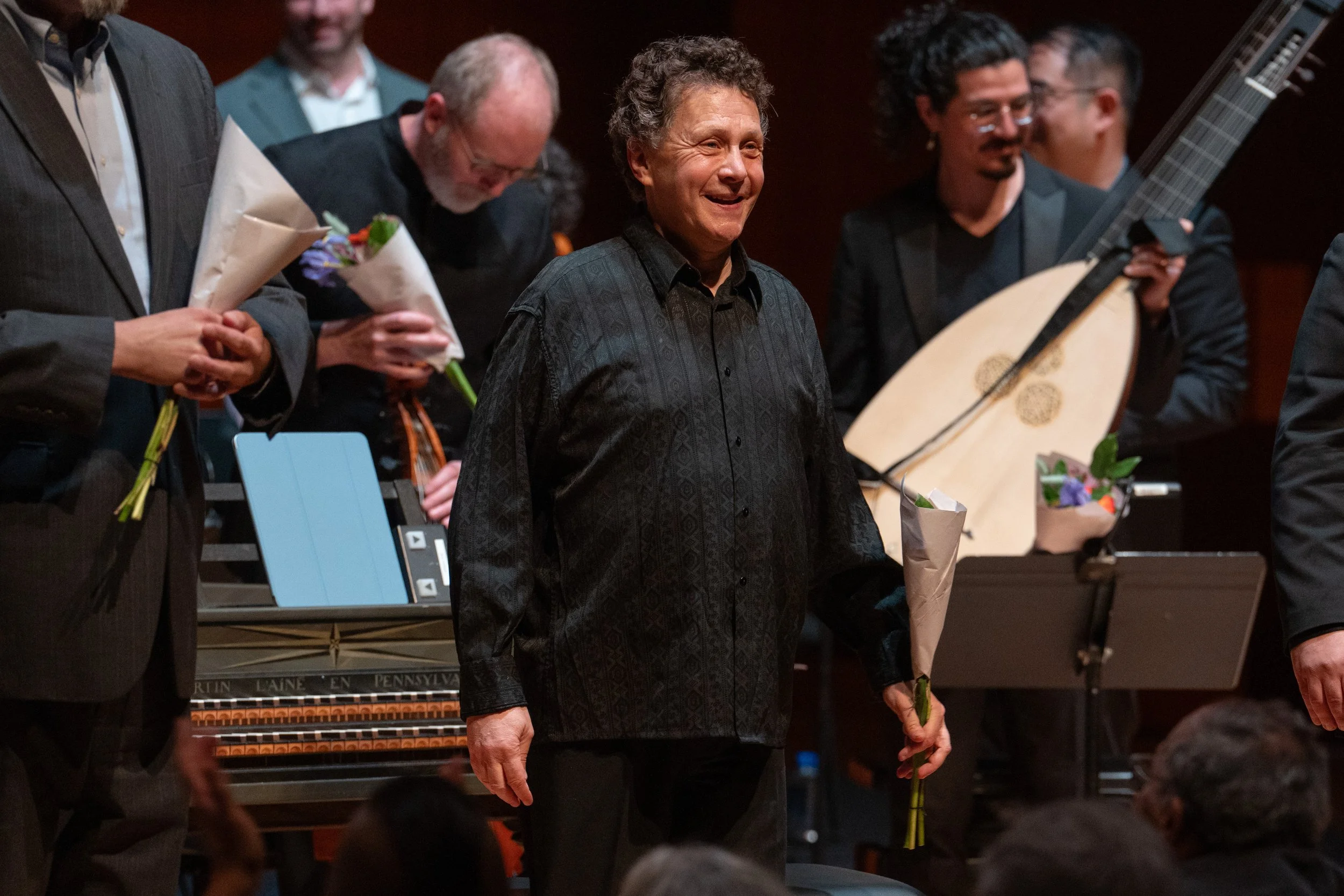
David et Jonathas, Haymarket Opera Company, 2026. Photo: Elliot Mandel
Competition wins, those are exciting of course. And you evoked my love for 20th-century repertoire for the harpsichord, you mentioned Francis Poulenc’s Concert Champêtre which I’ve performed all over the place (Europe, USA, Mexico, South Africa), which has provided me with the rare experience of feeling like a big symphony orchestra soloist. Playing that work (which I adore) and getting ovations many years ago with the Rotterdam Philharmonic was very thrilling and ego boosting and then somewhat more recently, I played it with the Cleveland Symphony under Stéphane Denève’s direction; these are all fabulous moments. I will say that the very first performance of Rinaldo at the Lyric Opera with Harry [Bicket] was pretty brilliant. Even more than Mr. Tommasini’s very flattering review, I feel an emotional attachment to the late Andrew Patner’s remarks. "When were you last at an opera where a harpsichord soloist got a standing ovation? Perhaps the genius performer, Chicago-born, Paris-based Jory Vinikour, gets this all the time. It was new to me and delightful."
There are so many things to say about making a career like this and I’ve done my best to make it on a strictly freelance basis, being interested in so many aspects of playing, early music and modern repertoire. I’ve played all over the place as a continuo player with important groups in France like Les Musiciens du Louvre, Les Arts Florissants, Les Talens Lyriques; all of that has made for a pretty interesting career lacking in boredom or ho-hum routine! I’ve seen things plateau for people but I feel I have by no means run out of interesting projects—as mentioned above, coming up in summer 2027, I’m in residence at the Santa Fe Opera Festival, and I’m thrilled to be playing onstage for a new work, Of One Blood, less amusing than Rinaldo (the conflict between Elizabeth I and Mary Queen of Scots, not a laugh-out-loud story). In January 2028, with thanks to Haymarket for the connection, I’ll be playing a Scarlatti recital at the Valletta Festival in Malta.
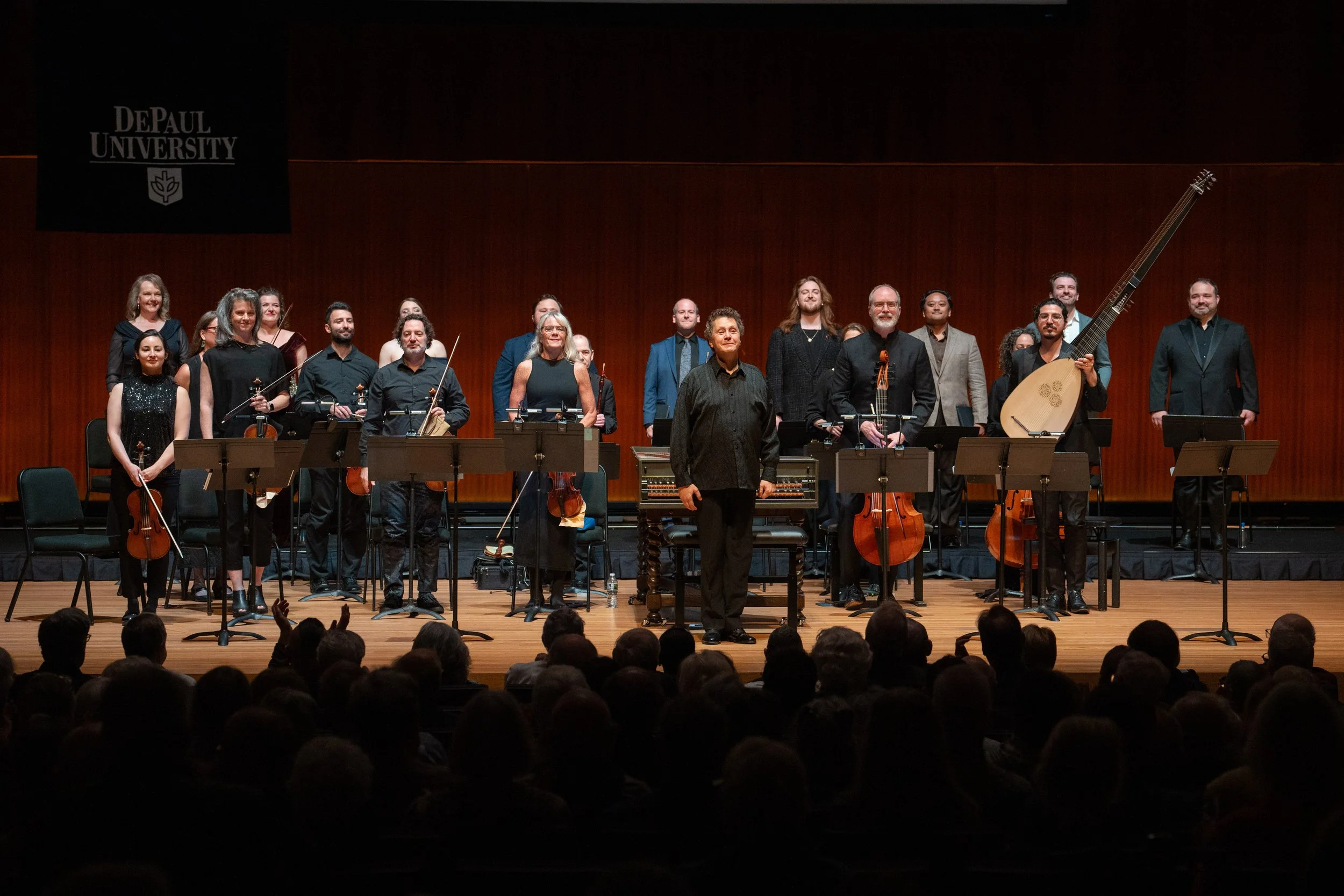
David et Jonathas, Haymarket Opera Company, 2026. Photo: Elliot Mandel
Music itself, playing music, has been my overriding passion that comes before anything so when things work and I have engagements, I’m thrilled, and when they don’t work, life can be a bit precarious but I do think that “vissi d'arte, vissi d'amore”—well, “vissi di musica,” I’ve just lived for that, rather unabashedly following my own inner harpsichordist.
For more detailed information and highlights of Jory’s live performance and recording career, please visit his website https://www.joryvinikour.com/ and see also
Cedille Records https://www.cedillerecords.org/artists/jory-vinikour/
Classics Today https://www.classicstoday.com/soloist/vinikour-jory/
For a deeper dive into the work of Charpentier and David et Jonathas in particular, please refer to the digital program book from the production, accessible from this page https://www.haymarketopera.org/david-et-jonathas and listen to Jory’s June 13, 2026, conversation with Oliver Camacho on WFMT
About the authors
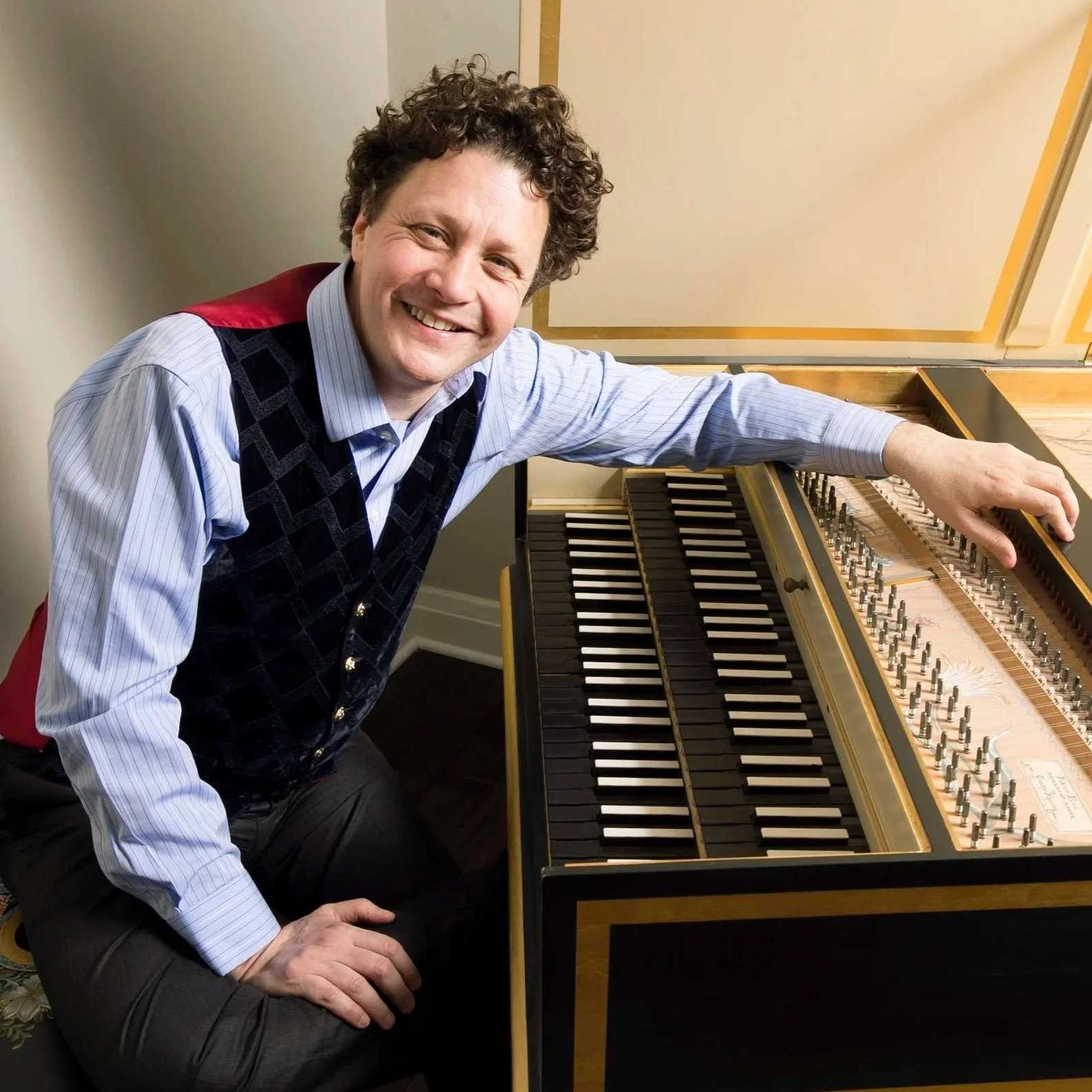
Jory Vinikour is internationally recognized as one of the leading harpsichordists of his generation, performing worldwide as soloist, conductor, and chamber musician. Winner of First Prizes at the Warsaw and Prague Spring International Harpsichord Competitions, he appears regularly at major festivals and concert halls across Europe, North America, and Asia. His extensive discography has earned two GRAMMY® nominations and widespread critical acclaim, including landmark recordings of Bach, Händel, Rameau, and Scarlatti. Equally renowned as a collaborator and continuo player, Vinikour works with today’s foremost singers, instrumentalists, orchestras, and opera companies.
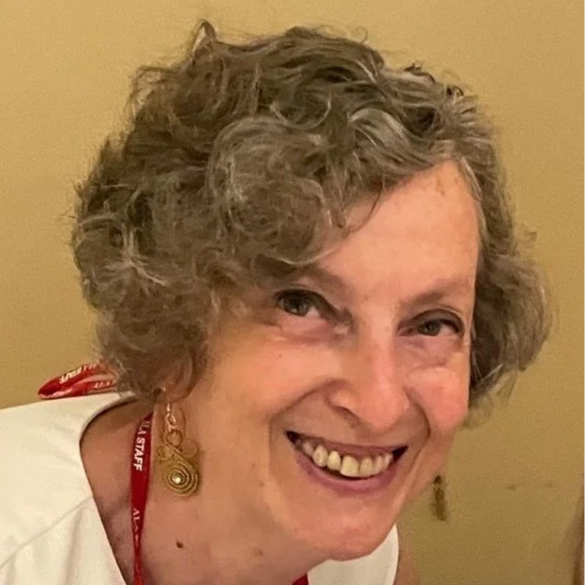
Mary Mackay spent her career in publishing, education, and library-related organizations, most recently as Associate Executive Director at the American Library Association. She has lived and worked in France, Japan, and her native England. She studies harpsichord in Chicago with Jason Moy, and has served on the Haymarket Opera Company board of directors for more than a decade.
About The Haymarket Review: This digital publication including thoughts about the work produced by Haymarket is designed to deepen our connection to audiences, nurture and feed audience curiosity about historical performance, offer critical opinions and thoughtful reflections on our performances, and provide a forum for Haymarket and its audience to connect through sharing insights, opinions, learning, and expertise.